Long before disability rights were enshrined in federal law, Judith Heumann was a teenager being told she was a 'fire hazard' and denied access to her local school. This singular moment of exclusion ignited a fire in her that would eventually lead to the most significant civil rights victories for disabled people in American history.
This article explores the real-world impact of Judith Heumann, focusing on the Section 504 Sit-in, the founding of the World Institute on Disability, and how she forced the government to acknowledge the fundamental humanity of disabled individuals.
A Lifetime of Resistance
Judith Heumann's story is not just one of persistence; it is a masterclass in strategic activism. Born in 1947, she contracted polio at the age of 18 months, an event that set her on a collision course with a society designed entirely for those without physical impairments. From being barred from elementary school to her eventual rejection from a teaching license on the basis of being a 'fire hazard,' Heumann experienced firsthand the systemic barriers that defined the mid-20th-century American experience for disabled citizens.
The turning point arrived when Heumann realized that her personal struggles were not isolated incidents of bad luck, but rather symptoms of a deeply entrenched civil rights crisis. By organizing, she transitioned from a solitary activist into a powerhouse leader, ultimately moving from the streets of New York to the halls of the Department of Health, Education, and Welfare in Washington, D.C.
The disability community is a vibrant, diverse, and powerful group, but for too long, our voices were silenced by those who thought they knew what was best for us.
The 504 Sit-in: A Watershed Moment
The crown jewel of Heumann’s activism was the Section 504 Sit-in of 1977. When the federal government refused to sign the regulations necessary to enforce Section 504 of the Rehabilitation Act of 1973—the first federal civil rights protection for people with disabilities—Heumann and hundreds of others took matters into their own hands. They occupied the HEW building in San Francisco, remaining there for 28 days in the longest sit-in at a federal building in U.S. history.
The strategy worked because it forced the public to look directly at the disability community. Supporters from the Black Panther Party provided hot meals to the occupiers, while local unions and religious groups rallied to keep the protest going. This intersectional solidarity was the secret weapon that eventually forced Secretary Joseph Califano to sign the regulations, effectively creating the blueprint for the Americans with Disabilities Act (ADA) years later.
Beyond the Legislation
While the legislative wins are often the focus of historical accounts, Heumann’s work was equally about shifting the cultural narrative. She was instrumental in advocating for the independent living movement, which posited that disabled people should be in control of their own lives and support services rather than being segregated in institutions. This shift was revolutionary for the time, marking a departure from the medical model of disability toward a social and political one.
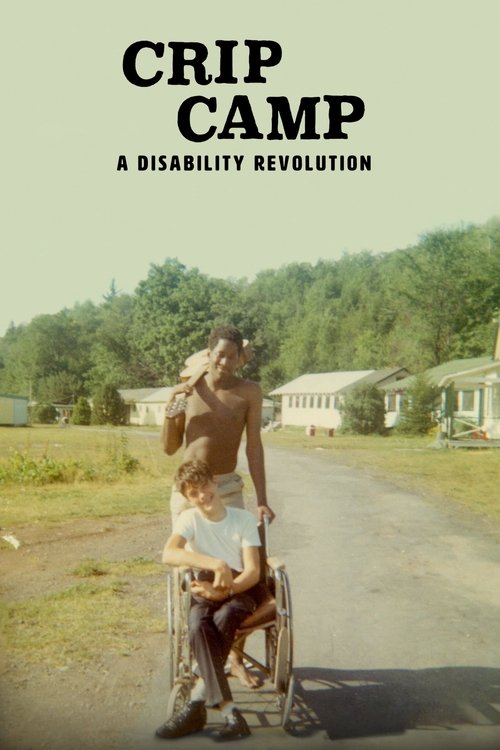
Crip Camp scene 1
What worked: The movement succeeded because it successfully framed disability as a civil rights issue rather than a charitable one. By centering the experiences of those living with disabilities, Heumann effectively dismantled the myth that inclusion was a 'favor' granted by the state, rather than a constitutional right.
We are not asking for charity; we are asking for the same civil rights as every other American.
The Legacy of Advocacy
Judith Heumann’s influence extended far beyond the borders of the United States. Through her work with the World Bank and her international consulting, she became a global ambassador for disability rights. She understood that while her specific fight began in Brooklyn, the struggle for universal access and human dignity was a shared human experience that spanned every continent and culture.
The verdict: Heumann’s life serves as a definitive roadmap for modern activism. She taught us that change requires more than just good intentions; it requires long-term coalition building, legal literacy, and the stubborn refusal to accept 'no' from those in power. Her impact remains visible in every curb cut, every closed-captioned broadcast, and every workplace accommodation that exists today.
Conclusion: The Work Continues
Reflecting on the life of Judith Heumann reveals the profound power of collective action. She did not succeed by trying to 'fix' herself to fit into a broken world; she succeeded by forcing the world to fix itself. As we look at the progress made in accessibility and equity, it is vital to remember that these rights were not gifted by the powerful—they were demanded and won by people who stood up, sat in, and refused to go home until the status quo changed.
The true legacy of Judith Heumann is not just a list of laws, but a challenge to each of us to recognize the barriers that still exist in our own communities. The fight for true inclusion remains unfinished, and as Heumann famously demonstrated, the only way to move forward is to do it together.