
Triangle Ending Explained: The Loop and the Broken Promise
⚠️ Spoiler Warning
This article contains major spoilers for Triangle (2009). Read only if you have already seen it.
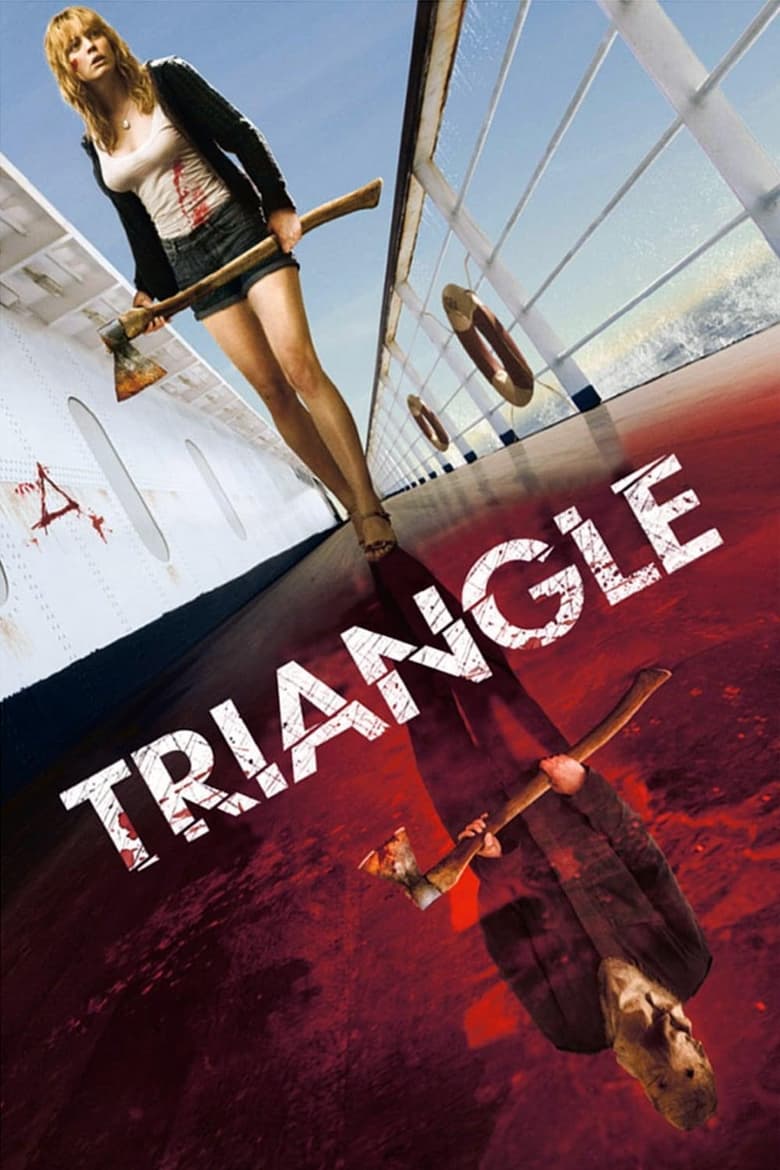
Christopher Smith's Triangle is a slasher that quietly becomes a Greek tragedy. A woman named Jess boards a deserted cruise ship, kills everyone on it, then realizes she is the killer. Then it happens again. And again. The loop is not a glitch. It is a sentence.
Here is what the ending shows, what the broken promise means, and why the loop is a punishment she chooses.
Quick Answer
Jess (Melissa George) is trapped in a causal time loop because she broke a promise to a taxi driver, a Charon-like figure, to return to him after visiting the harbor. The loop is her punishment for the death of her son, whom she abused and killed in a car accident. Each cycle, she kills the friends on the ship, tries to go home and save her son, fails, and re-boards the boat to try again. She never escapes because she will not accept that her son is gone.
The Loop, Step by Step
Jess sails with friends on a yacht called Triangle. A storm flips them onto a passing cruise ship, the Aeolus. On board, a masked killer begins murdering the group. Jess eventually realizes the killer is a future version of herself. Every time she kills everyone, a new version of the group arrives. She tries to stop the cycle, fails, and is washed overboard back to shore.
She goes home, sees her past abusive self yelling at her son, kills that version of herself, takes the boy driving away, and crashes the car, killing him. A taxi driver appears, tells her no one can bring back the boy, and asks if she wants a ride to the harbor. She promises to return. She does not. She boards the boat again. The loop restarts.
"The ship is named Aeolus. In myth, Sisyphus was punished to push a boulder up a hill for eternity. Jess is Sisyphus. The loop is not a puzzle to solve. It is a sentence to serve."

The Taxi Driver and the Broken Promise
Strongly implied: The driver is a psychopomp, a guide of souls, in the tradition of Charon. He sees Jess when others cannot. He tells her plainly that the boy cannot be brought back. He asks her to promise to return, leaving the meter running. She breaks that promise. The loop begins the moment she does.
Interpretation: The promise is the contract. If Jess kept it, she would accept her son's death, die or wake, and the loops would end. She cannot. She goes back to the harbor and boards the boat again, believing this time she can beat the loop and save him. She is wrong every time.
Why Jess Does Not Remember
Jess sleeps twice in each cycle, in the taxi and on the boat, and each sleep seems to wipe her memory. The film leaves open whether the forgetfulness is imposed or chosen. If she remembered everything, she would know the loop is unwinnable and might stop. Her amnesia lets her keep hoping. The loop survives on that hope.

The Sisyphus Reading
Interpretation: The ship's name, Aeolus, connects the film to Greek myth. Sisyphus, punished to roll a boulder uphill for eternity, is the model. Jess is not trapped by the supernatural alone. She is trapped by her refusal to grieve. Every cycle she pushes the boulder, saves no one, and watches it roll back down. The loop ends only when she lets go. She never does.
Frequently Asked Questions
Why is Jess stuck in a loop in Triangle?
Jess broke a promise to the taxi driver to return to him after going to the harbor. That violation, combined with her guilt over her abusive treatment of her son and his death in the car crash, traps her in a repeating time loop aboard the ship Aeolus.
Who is the taxi driver in Triangle?
The driver functions as a psychopomp, a Charon-like figure. He asks Jess to promise to return, and she breaks that promise, which is what sets the loop in motion. He sees her; other bystanders do not seem to register him.
Why does Jess not remember the loop?
Jess falls asleep in the taxi and again on the boat, and each sleep appears to reset her memory. Whether she deliberately chooses to forget so she can keep trying to save her son is left as an open question by the film.
Did Jess kill her son?
Yes. The film reveals Jess was an abusive mother who killed her son in a car accident, then boarded the boat hoping to undo it. The loop is her punishment and her futile second chance.
Final Verdict
Triangle's ending is not a puzzle with a hidden solution. It is a portrait of guilt that refuses to end. Jess could walk away. The driver told her how. She goes back to the boat instead, because going back means she can still try to save her son, and trying is easier than accepting. The loop is the price of that refusal.
Jess is not trapped by time. She is trapped by the belief that this time, finally, she can undo what she did.
Related Ending Explained Guides
Written by StreamRoulette Editorial
You May Also Like


Not Sure What to Watch Next?
StreamRoulette picks your next film in seconds — based on mood, genre, or platform.
Try StreamRoulette