
Coherence Ending Explained: The Woman Who Killed Herself to Be Happy
⚠️ Spoiler Warning
This article contains major spoilers for Coherence. Read only if you have already seen it.

James Ward Byrkit's 2013 micro-budget masterpiece was filmed in five nights with no script — only scene-by-scene motivations given to actors who improvised their reactions in real time. A comet passes over Earth. A dinner party of eight friends begins. And by the end of the night, nothing is what it was.
Here is what the comet does, how the houses multiply, what the glow sticks mean, and why the ending will haunt you long after the credits.
The film opens with eight friends gathering for a dinner party. Em, the protagonist, is dealing with a stalled dance career and a relationship that is falling apart. The comet passes overhead, phones crack, the power goes out — and the only house with lights on is two blocks away. When a group goes to investigate, they return with a box containing photos of themselves and numbered ping-pong paddles. None of them understand what is happening. The audience does not either. And that is intentional.
The comet has created a quantum decoherence event. Multiple parallel realities have collapsed into the same physical space. Every time someone leaves the house and walks through the dark zone, they cannot find their way back to their original timeline. They enter a different version of the house — a version where slightly different events occurred. The glow sticks determine which reality each person belongs to. The box of photos is a marker from an earlier reality that already discovered what was happening.
"There are infinite versions of this dinner party happening simultaneously. Every time someone goes outside, they can never go back to the same house."
How the Multiverse Works in Coherence
Unlike Marvel multiverse stories with distinct universes, Coherence presents a continuous spectrum of overlapping realities. There are not a few alternate houses. There are infinite variations, bleeding into each other, with the dark zone between them serving as a chaotic transition. The number on the box they find — and the photo inside — does not match the reality of any single person in the room. It is from a version of the dinner party where the group already solved the puzzle.
As the night continues, the group fragments further. Some houses descend into violence. Others find enlightenment. Some versions of the same people are dead. The film is less interested in explaining every rule than in exploring the psychological horror of discovering that your reality is not the only one — and that other versions of yourself are making different choices right now.
Em's Journey Through the Houses
In the final act, Em leaves the house alone and walks through the dark zone, peering through windows at different versions of the dinner party. She sees a reality where everyone is fighting. One where everyone is calm. One where she and Kevin are still together. She finds a house where her alternate self is happy — with Kevin, with her career, with everything Em wanted and lost. And Em decides to take it.
She attacks her alternate self in the bathroom, knocks her out, and drags her outside. She then steps into the house and pretends to be the Em who belongs there. She has replaced herself in a timeline where she is happy. She has stolen her own life from a version of herself who earned it.
"She did not travel to a better timeline. She murdered the version of herself who had the life she wanted, and took her place."

The Ending: Kevin's Phone Call
The next morning, the comet has passed. Em wakes up in the happy reality, pretending everything is normal. Kevin gets a phone call. He answers it, confused. He looks at Em — directly at the camera — and says: "Em?" The film cuts to black.
The caller is almost certainly the real Em from this timeline — the one Em attacked and left outside. She survived, crawled to a phone, and called Kevin. The ending implies that Em's theft of her own happiness is about to unravel. Kevin now knows something is wrong. The new Em cannot explain the phone call. The perfect reality she stole is already cracking.
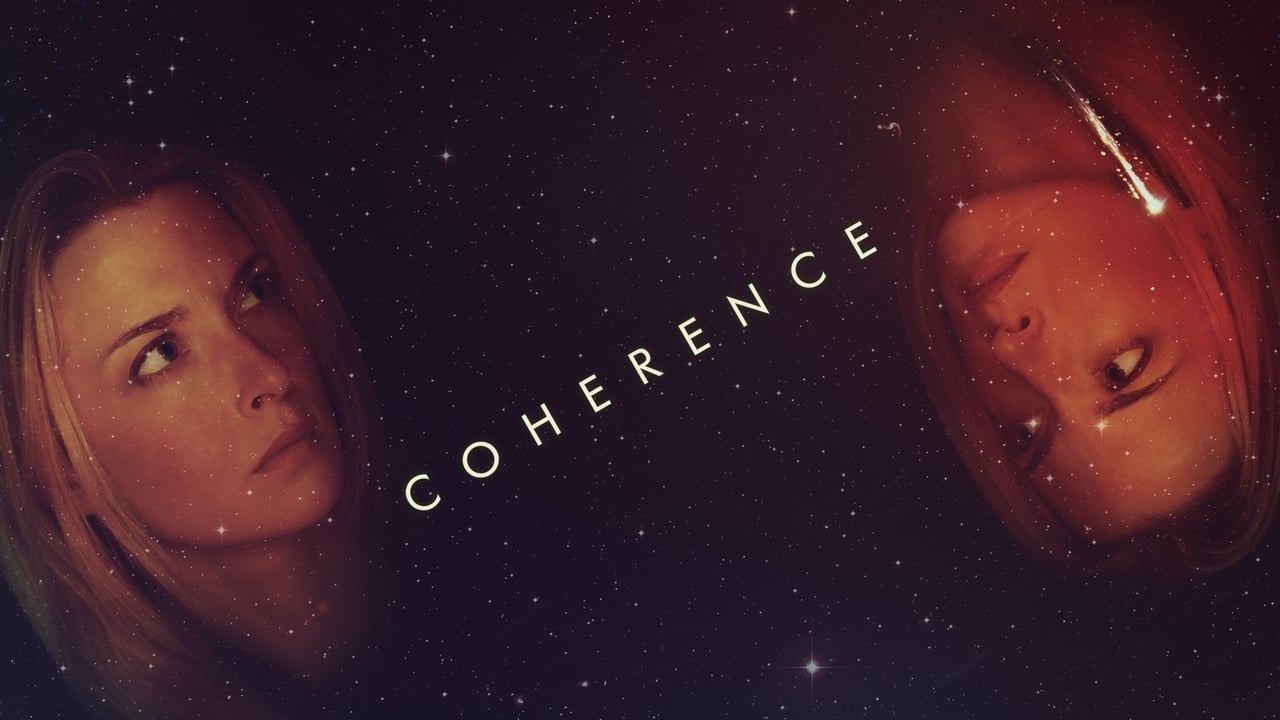
What the Director Intended
Byrkit wanted to make a film about human nature — specifically about the choices people make when they think no one is watching. The quantum decoherence is a metaphor: in a world where every version of your life exists simultaneously, what would you do to get the one you want? Em's answer is horrifying. She kills herself. Not physically — but she destroys another version of her own existence to claim its rewards.
The genius of the film is that it does not judge Em. It just shows you what she does and lets the horror sink in. The scariest moment in Coherence is not when a stranger appears at the door. It is when you realize the stranger is yourself.
Coherence asks a simple question and lets the answer terrify you: how far would you go to be the version of yourself who made the right choices?
Why People Still Debate It
The film's micro-budget and improvised dialogue give it a raw authenticity that makes the metaphysical horror feel grounded. This is not a CGI multiverse. It is eight people in a single house with glow sticks, and the horror comes from the human decisions, not the visual effects. The ending in particular has generated intense debate: does the phone call mean the real Em survived? Is the new Em about to be exposed? Or is Kevin simply confused because the comet's effects are lingering? Byrkit has said he knows the answer but will not share it, preferring that audiences continue to argue.
The enduring power of Coherence is that it makes the multiverse feel personal. This is not about saving the universe from a purple alien. It is about one woman looking at a version of her life that is better than the one she has and deciding to take it — at the cost of the version of herself who was living it. The science fiction conceit is a delivery mechanism for a question about human nature that has no comfortable answer.
Written by StreamRoulette Editorial
You May Also Like


Not Sure What to Watch Next?
StreamRoulette picks your next film in seconds — based on mood, genre, or platform.
Try StreamRoulette