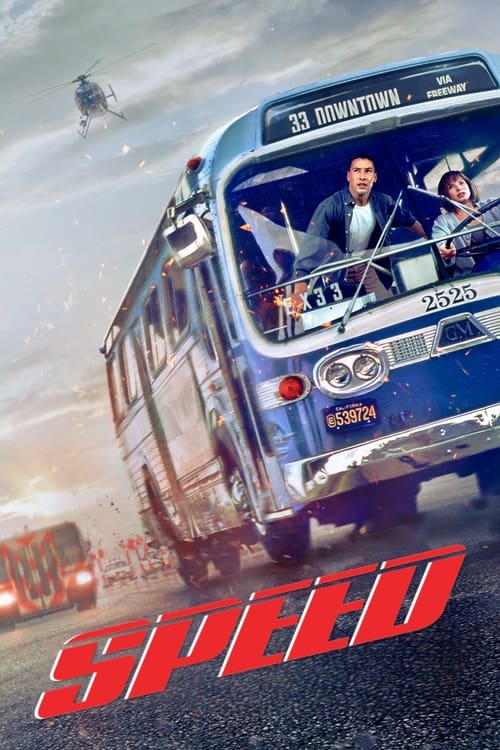
This article contains major spoilers for Speed. Read only if you have already seen it.
Few films define the high-concept, high-octane thrill ride quite like 1994’s Speed, a movie that thrives on the simple, terrifying premise of a bus that cannot slow down. It is a masterclass in escalating tension, forcing its characters—and its audience—into a constant state of fight-or-flight that rarely lets up until the credits roll.
If you are craving that specific brand of non-stop momentum, claustrophobic stakes, and relentless pacing, you need films that refuse to take their foot off the gas. Here are five action-packed thrillers that capture the exact same kinetic energy and high-pressure stakes.
When Jan de Bont directed Speed, he distilled the action genre down to its purest form: a ticking clock, a confined space, and a hero who is forced to think faster than the villain. The film works because it respects the audience's time, moving from one impossible set piece to the next without a wasted moment. Finding other films that replicate this feeling requires looking for movies that prioritize structural intensity over bloated exposition.
1. Unstoppable (2010)
The premise: If Speed is about a bus that cannot stop, Tony Scott’s Unstoppable is about a runaway freight train carrying hazardous chemicals that cannot be halted. Much like the bus in Speed, the train serves as an unstoppable force of nature that becomes the primary antagonist, pushing the human protagonists to their absolute limits.
What works: The practical effects and the sheer weight of the cinematography make the train feel like a living, breathing monster. What did not work: Some viewers feel the dialogue is a bit thin, but in a film this focused on physical momentum, the script is intentionally lean. The verdict: This is arguably the closest spiritual successor to Speed ever made.
Speed scene 1
The train in Unstoppable is more than just a vehicle; it is a relentless, ticking bomb that forces its characters to confront their own mortality at sixty miles per hour.
2. The Taking of Pelham 123 (1974)
The context: While the 2009 remake has its moments, the 1974 original is the gold standard for subway-based tension. A group of armed men hijack a New York City subway car and demand a ransom, turning the claustrophobic underground tunnel into a pressure cooker.
Why it hits: The film relies heavily on the cat-and-mouse dynamic between the transit police officer and the hijacking mastermind. It captures that same sense of a "public space gone wrong" that defined the bus sequence in Speed. The intensity: It is a gritty, grounded thriller that proves you do not need big explosions to create a sense of impending doom.
3. Non-Stop (2014)
The stakes: Liam Neeson plays an air marshal on a transatlantic flight who begins receiving text messages from an anonymous killer on board. If the plane isn't stopped, people will die every twenty minutes. The airplane provides the perfect isolated environment for a high-stakes puzzle.
The execution: It takes the "locked room" mystery and injects it with pure adrenaline. The intensity: It forces the audience to constantly re-evaluate who they can trust, much like the passengers on the bus in Speed. The verdict: A perfect example of a high-concept action movie that keeps the mystery as tight as its action sequences.
Speed scene 2
Non-Stop succeeds because it forces the audience to play along with the protagonist, turning the cramped cabin of a Boeing 767 into a claustrophobic labyrinth of suspicion.
4. Runaway Train (1985)
The tone: This is a darker, more philosophical take on the "runaway vehicle" subgenre. Two escaped convicts find themselves trapped on a train that has lost its engineer, hurtling through the frozen Alaskan wilderness. It is less about saving everyone and more about survival against impossible odds.
The atmosphere: The film is brutal, cold, and incredibly tense. It strips away the polished Hollywood sheen of most action films to deliver something raw and visceral. The takeaway: If you liked the desperation of Speed, this film pushes that emotion to the breaking point.
5. Source Code (2011)
The concept: While it leans into sci-fi, the core of Source Code is a high-stakes, time-loop thriller set on a commuter train. A man is forced to relive the last eight minutes of a stranger's life repeatedly to identify a bomber. It captures the repetitive, high-stress cycle of trying to defuse a bomb while running out of time.
Speed scene 3
Why it fits: The constant re-looping creates a sense of extreme urgency that mirrors the momentum of Speed. Every failure is a learning opportunity, and the clock is always ticking down. The verdict: A brilliant, tightly coiled thriller that keeps the stakes sky-high until the final scene.
Source Code is essentially a bomb-disposal procedural trapped in a time loop, turning every failure into a stepping stone toward a frantic, edge-of-your-seat conclusion.
Conclusion
The beauty of a film like Speed lies in its ability to strip away the unnecessary and leave the audience with nothing but the immediate threat. Whether it is a train, a plane, or a looping timeline, these five films understand that tension is the ultimate currency of the action genre.
By limiting the scope and increasing the danger, these directors prove that you don't need a massive world to tell an unforgettable story. If you want to keep that heart-pounding sensation alive, these five films are essential viewing for any fan of pure, unadulterated suspense.