This article contains major spoilers for East of Eden. Read only if you have already seen it.
In the shadowed corners of John Steinbeck's epic narrative, a serpent emerges in the form of Cathy Ames, brought to life with terrifying brilliance by Florence Pugh. Her performance is not merely an interpretation; it's a primal force that redefines villainy.
This article delves into the magnetic and deeply disturbing portrayal of Cathy Ames, examining how Pugh’s performance anchors the thematic weight of Steinbeck's exploration of good versus evil and establishes her as the undeniable fall season's most captivating antagonist.
John Steinbeck’s monumental novel, 'East of Eden,' has long been a touchstone for its profound examination of the human condition, particularly the eternal struggle between good and evil, often personified in the Cain and Abel narrative. While the story’s vast landscape is populated by complex characters grappling with their destinies, one figure looms largest in her capacity for darkness: Cathy Ames. The recent adaptation has thrust this enigmatic character back into the spotlight, and it is Florence Pugh’s visceral, chilling performance that has cemented Cathy as the season's most compelling and terrifying villain.
The Unsettling Genesis of Cathy Ames
Cathy Ames is not a villain born of circumstance, but one seemingly forged in the fires of pure malice. Steinbeck's text offers glimpses into her horrific childhood, hinting at a profound disconnect from empathy, a predatory instinct, and an innate, almost supernatural ability to manipulate. She is a creature of shadow, a stark contrast to the striving, flawed humanity that surrounds her. Her motivations are opaque, her actions driven by a logic that is both alien and terrifyingly recognizable in its capacity for cruelty.
The challenge in portraying Cathy lies in balancing her monstrousness with a semblance of human form, making her not just a plot device but a character whose very existence challenges the audience's understanding of morality. She is the darkness that allows the light of others to be perceived, a living embodiment of the original sin that permeates the narrative.
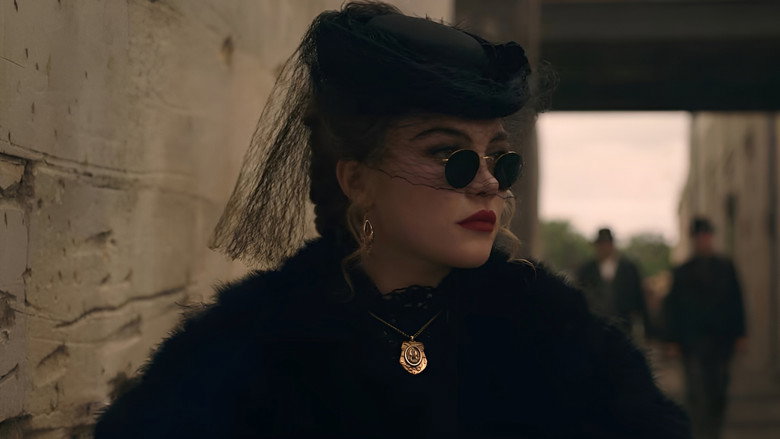
East of Eden scene 1
“Some men are born winds, and others are born trees. Cathy was a wind.” - John Steinbeck, East of Eden
Florence Pugh's Transformative Performance
Florence Pugh has a remarkable talent for inhabiting characters who exist on the edge of human experience, but her turn as Cathy Ames is a masterclass in controlled ferocity. She eschews overt theatrics, opting instead for a performance that is chillingly understated. Her eyes, often described as windows to the soul, are here a void, reflecting nothing but a cold, calculating intelligence. Pugh’s physicality is equally impactful; a subtle shift in posture, a predatory stillness, or a sudden, unnerving smile speaks volumes.
Pugh masterfully navigates the character's dual nature – the alluring facade she presents to the world and the absolute void beneath. She conveys Cathy’s manipulative genius not through grand pronouncements, but through quiet whispers, expertly placed silences, and a gaze that seems to strip away any pretense. It is a performance that is both deeply unsettling and utterly mesmerizing, drawing the audience into the vortex of Cathy’s darkness even as they recoil from it.
Thematic Resonance: Good vs. Evil Personified
Cathy Ames is the narrative engine of 'East of Eden,' the disruptive force that propels the Trask family into their biblical parallels. She is the embodiment of Timshel, the Hebrew word that Steinbeck uses to explore the concept of free will – the choice between good and evil. While other characters grapple with their choices, Cathy seems to exist in a state of pre-ordained malevolence, a force of nature that actively chooses darkness.
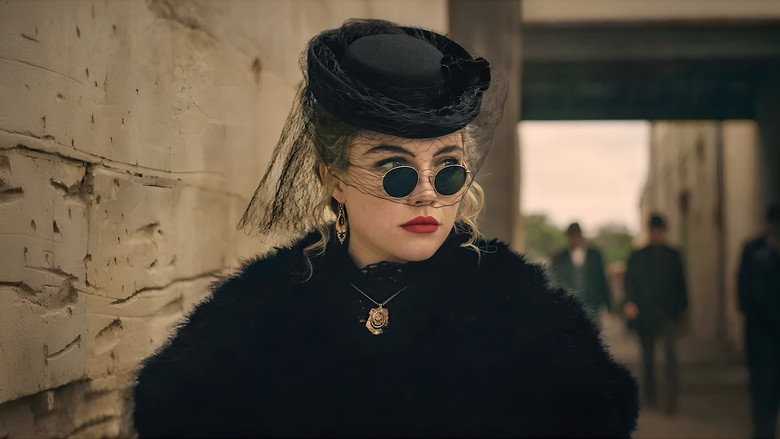
East of Eden scene 2
Pugh’s portrayal amplifies this thematic core. She doesn't play Cathy as a victim or as someone merely succumbing to her nature; she plays her as an active agent, reveling in her power and her capacity for destruction. This unwavering commitment to the character’s inherent darkness makes her a more potent symbol of the evil that Steinbeck sought to explore, forcing viewers to confront uncomfortable truths about human nature and the choices we make.
“It is the power of love that we are talking about. We have the power of love to destroy, to corrupt, to kill. But also the power to redeem, to save, to uplift.” - A sentiment echoed in the exploration of Cathy's destructive love.
The Disturbing Allure of the Antagonist
What makes Cathy Ames so captivating, and Florence Pugh’s performance so effective, is the inherent human fascination with the monstrous. We are drawn to the forbidden, to the darkness we typically suppress. Cathy represents the id unleashed, a being unbound by societal norms or moral compunctions. She is the ultimate 'other,' a figure who, paradoxically, makes us examine our own capacity for good and evil.
Pugh understands this dynamic implicitly. She doesn't shy away from the character's repellent qualities; instead, she leans into them, making Cathy’s depravity both terrifying and, in a twisted way, compelling. The audience finds themselves on the edge of their seats, not just waiting for Cathy to wreak havoc, but also watching, almost hypnotized, as Pugh orchestrates her descent into darkness.
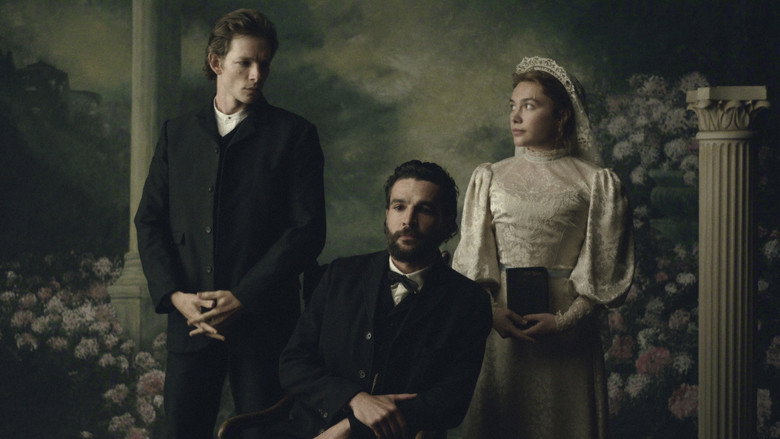
East of Eden scene 3
What Worked: A Villain for the Ages
What worked: Florence Pugh’s nuanced and terrifying portrayal of Cathy Ames is the undeniable anchor of this adaptation. She embodies the character's profound and unsettling evil with a chilling stillness that is far more impactful than any overt display of villainy. The supporting cast provides strong performances, but Pugh is the gravitational center, pulling the narrative into her dark orbit.
What Did Not Work: Pacing and Nuance
What did not work: At times, the narrative struggles to balance the epic scope of Steinbeck’s novel with the demands of serialized storytelling. While Cathy’s arc is riveting, some of the surrounding plotlines occasionally feel rushed or underdeveloped, particularly in comparison to the sheer force of Pugh’s presence. The adaptation could have benefited from more breathing room to fully explore the complex relationships and thematic nuances that make the novel so enduring.
The Verdict: A Landmark Performance
The verdict: 'East of Eden' has delivered a villain for the ages in Cathy Ames, and Florence Pugh has provided a landmark performance that will be discussed for years to come. Her ability to embody pure, unadulterated evil while simultaneously maintaining a terrifying human exterior is a rare gift. This is a performance that transcends genre, solidifying Pugh’s status as one of the finest actresses of her generation and making 'East of Eden' essential viewing for anyone interested in the darker aspects of the human psyche.