Christopher Nolan's The Odyssey — Everything We Know So Far
There are stories that belong to all of us.
Homer's Odyssey is one of them. Nearly three thousand years old. Still the most human story ever written.
And Christopher Nolan is about to put it on an IMAX screen.
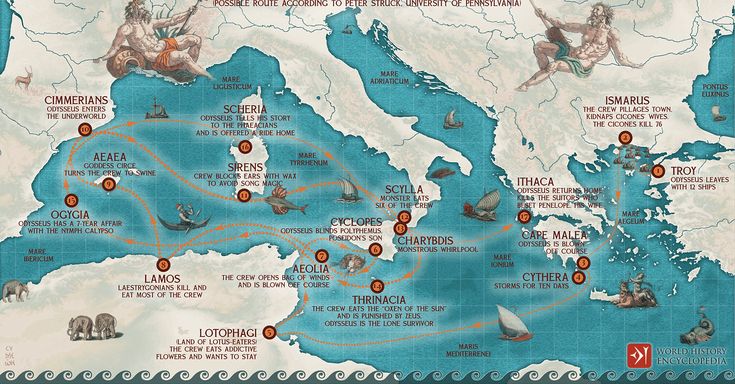
The possible route of Odysseus's ten-year journey home, according to Peter Struck, University of Pennsylvania.
Since Memento, Nolan has been obsessed with the way time bends around human experience. He fractured it in Dunkirk, looped it in Interstellar, folded it back on itself in Tenet. Every film he makes is, at its core, about a person trying to find their way home — emotionally, physically, existentially.
The Odyssey is the original version of that story. A soldier. A sea. A home that keeps receding. Ten years of war followed by ten more years of everything else — gods, monsters, temptation, grief, and the sheer exhausting act of refusing to give up.
That Nolan has chosen this as his next film does not feel like a surprise. It feels inevitable. And the cast he has assembled is one of the most extraordinary in modern cinema history.
The Story
The Trojan War is over. After ten years of fighting and a wooden horse full of soldiers, Troy has fallen. The Greek armies begin their journey home. Most of them arrive.
Odysseus does not.
He is the King of Ithaca. Husband to Penelope. Father to a son he barely knows. A man who has survived everything — and now must survive the sea itself. The journey that should take weeks becomes a decade-long ordeal across the edge of the known world.
He will sail into the cave of the Cyclops Polyphemus, a one-eyed giant who eats men alive — and escape only by blinding him with a burning stake and hiding beneath the bellies of sheep. He will spend a year on the island of Circe, the sorceress who transforms his crew into animals. He will sail past the Sirens, creatures whose song is so beautiful that every sailor who hears it steers willingly into the rocks — and survive only because he orders himself tied to the mast.
Poseidon, god of the sea, despises him. The reason is personal. Every time Odysseus is close to home, the god raises a storm. Shipwrecks him. Sends him further out. The ocean itself is against him.
Back in Ithaca, his wife Penelope is being consumed. Over a hundred suitors have invaded the palace, eating his food, sleeping in his halls, and competing for his widow — because everyone has decided that Odysseus is dead. His son Telemachus has grown up without a father and is running out of time to defend what little remains.
The Odyssey is not an action story. It is a survival story. A story about what a person holds onto when everything has been taken from them. What they become in the space between war and peace, between the person they were and the person they must still manage to be.
Confirmed Cast and Characters
The cast Nolan has assembled for The Odyssey may be the most stacked ensemble in blockbuster history. Multiple Oscar winners. Generational talents. Actors at the peak of their powers, playing characters who have endured for three thousand years.
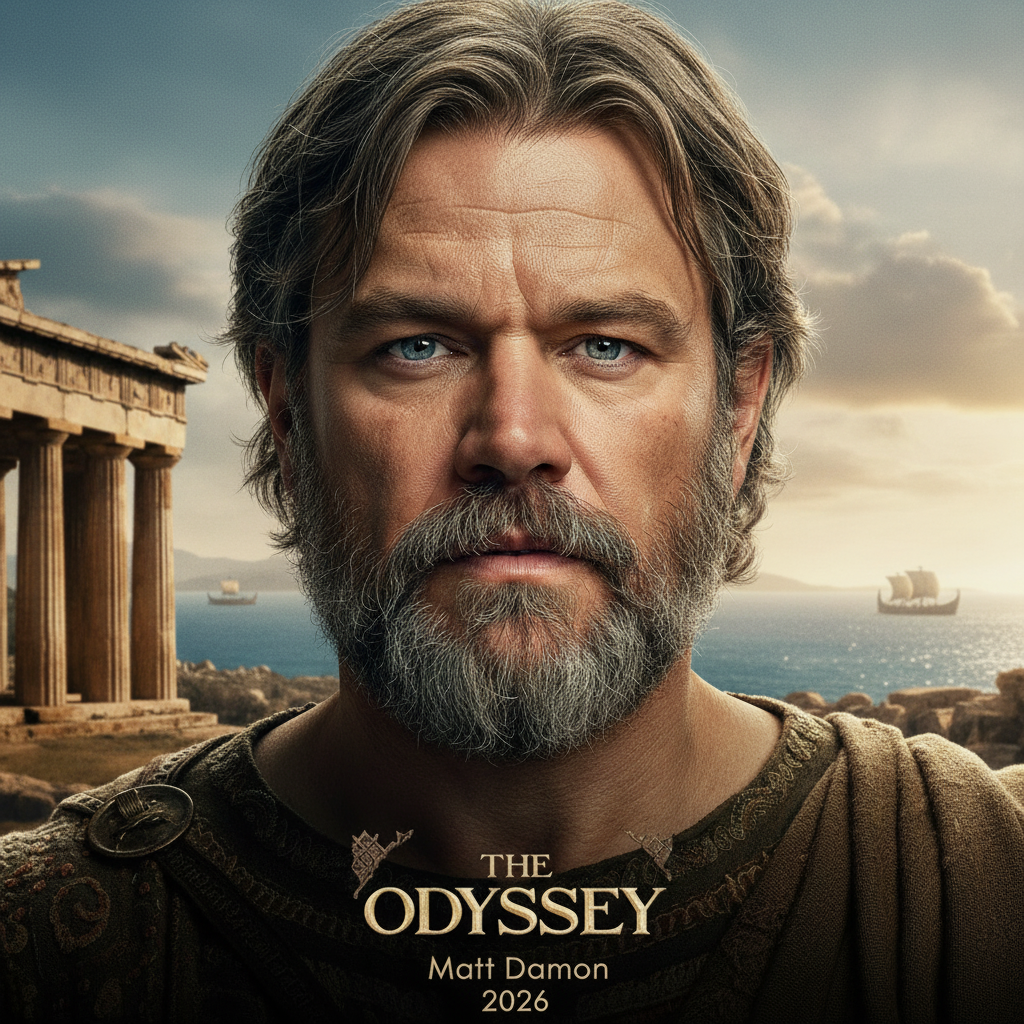
Matt Damon
Odysseus
Odysseus
Matt Damon
The King of Ithaca. A warrior who survived Troy only to face ten more years of gods, monsters, and open sea. He is not a hero who charges forward — he is a man who endures, deceives, and calculates his way through an impossible world.
Damon brings a grounded, lived-in quality that Odysseus demands. He is not a myth. He is a man who has seen too much and is still trying to get home.
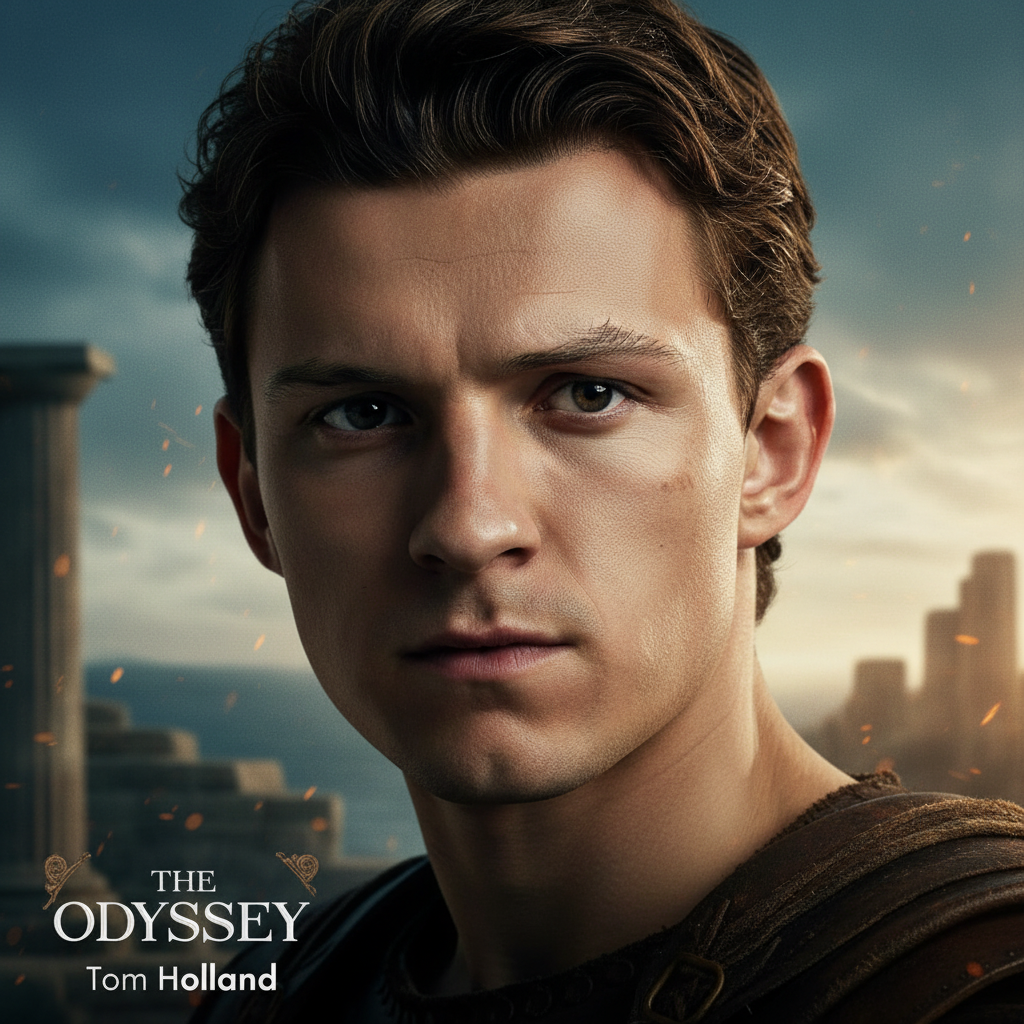
Tom Holland
Telemachus
Telemachus
Tom Holland
The son who grew up without a father. Telemachus has spent his entire life hearing stories about a man he has never truly known. As the film opens, he is searching for answers — and discovering what it means to become someone worth finding.
Holland has quietly proven himself one of the most emotionally precise actors of his generation. Playing the son of a legend, he brings vulnerability that could steal every scene he is in.
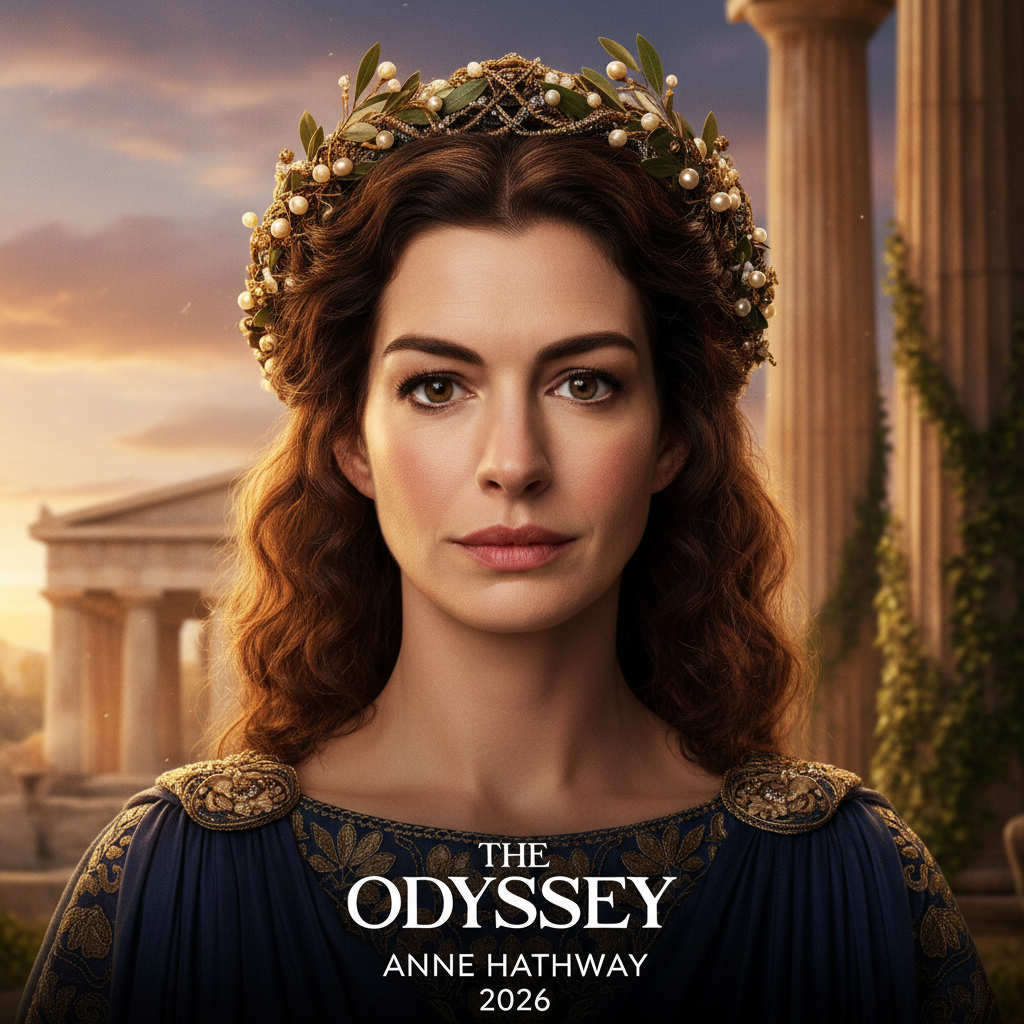
Anne Hathaway
Penelope
Penelope
Anne Hathaway
The Queen who waited. Penelope is not passive — she is tactical, patient, and fierce in her own way. She has spent twenty years holding her kingdom together while suitors consumed her palace and questioned her power.
Hathaway carries a quiet authority that perfectly suits a woman who has been underestimated for decades. Her presence will give Penelope the weight the character deserves.
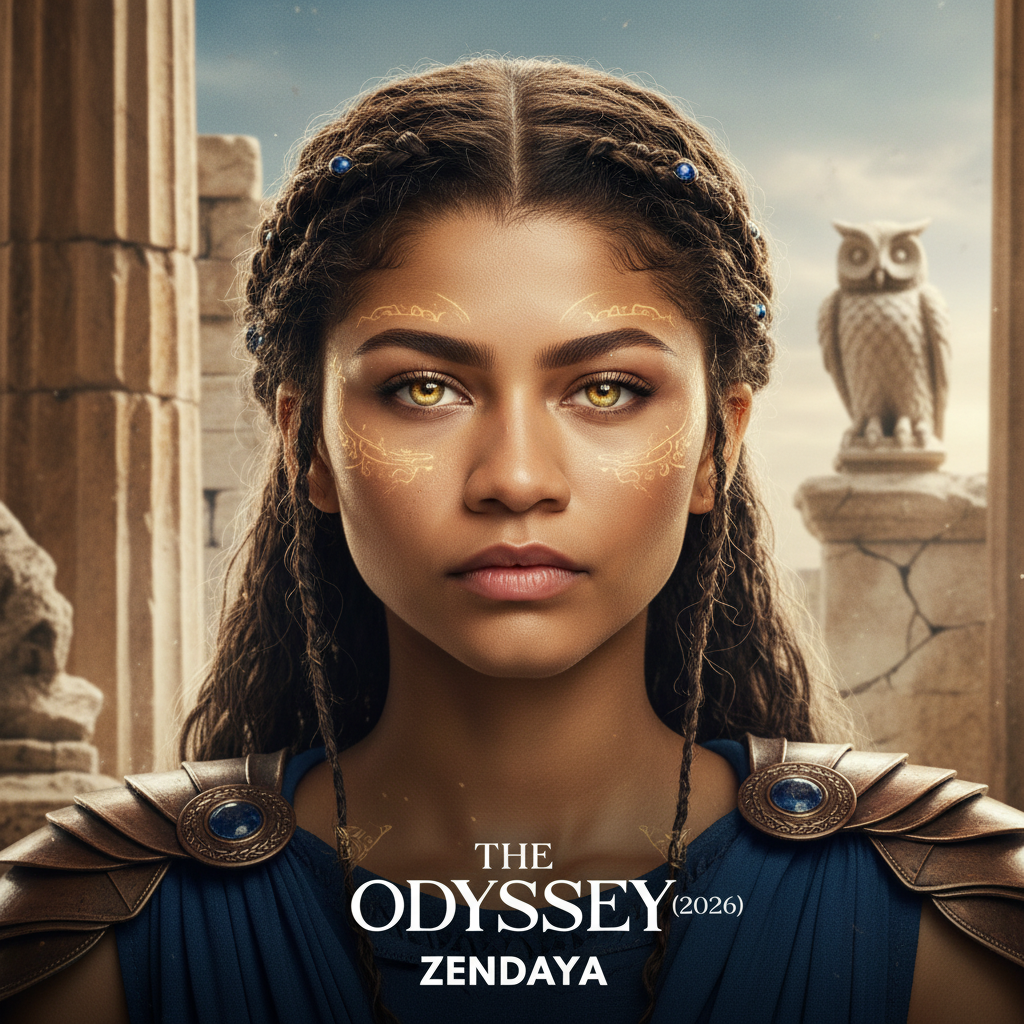
Zendaya
Athena
Athena
Zendaya
The goddess of wisdom and war. Athena watches over Odysseus not out of pity but out of recognition — she sees in him a mind sharp enough to be worth saving. She is not warm. She is strategic. And she is always three steps ahead.
Zendaya has an otherworldly presence that translates beautifully to a deity who exists between the human and the divine. She will bring an iciness to Athena that feels genuinely mythological.
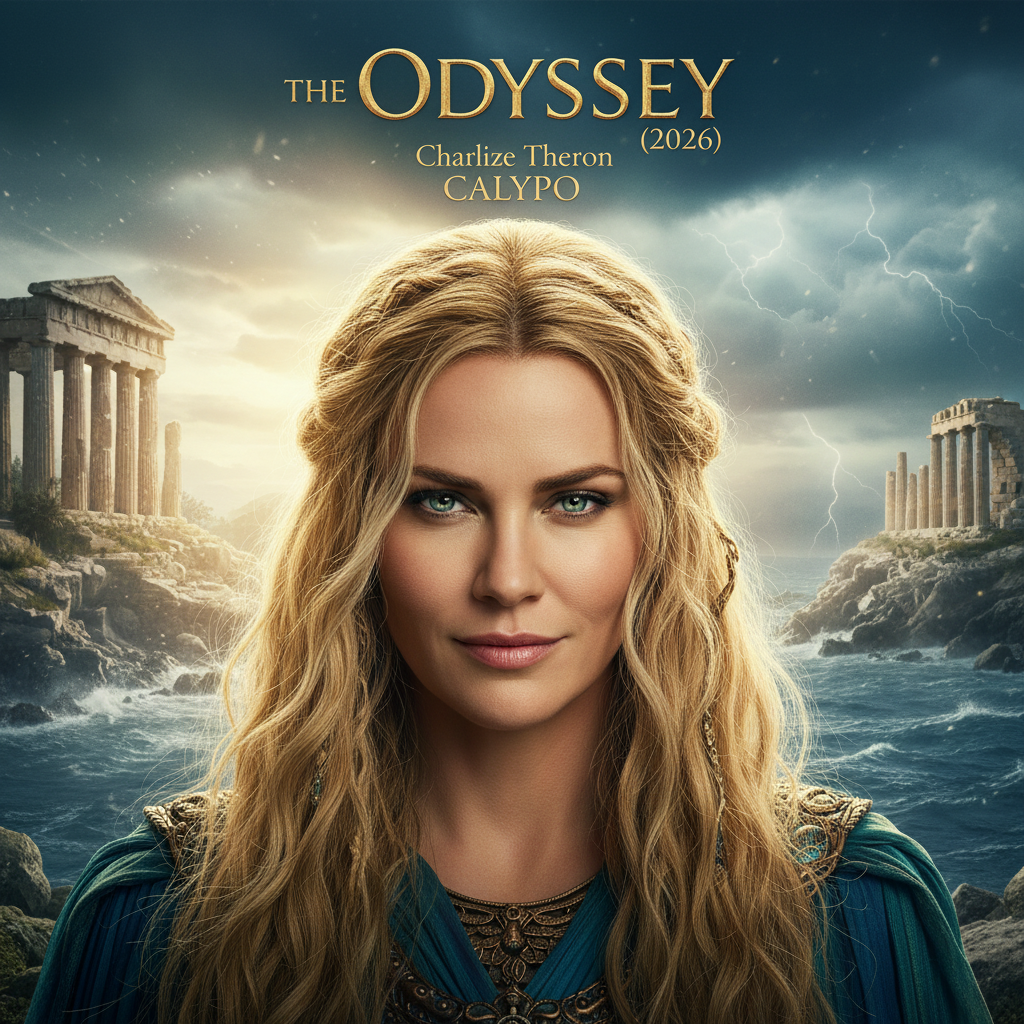
Charlize Theron
Calypso
Calypso
Charlize Theron
The nymph who kept Odysseus captive on her island for seven years. Calypso is one of the story's most complex figures — she genuinely loves him, and genuinely refuses to let him go. Her love is a prison. Her island is paradise. Both things are true at the same time.
Theron has built a career on playing women who are simultaneously powerful and dangerous. Calypso is exactly that. She is the film's most unpredictable wildcard.
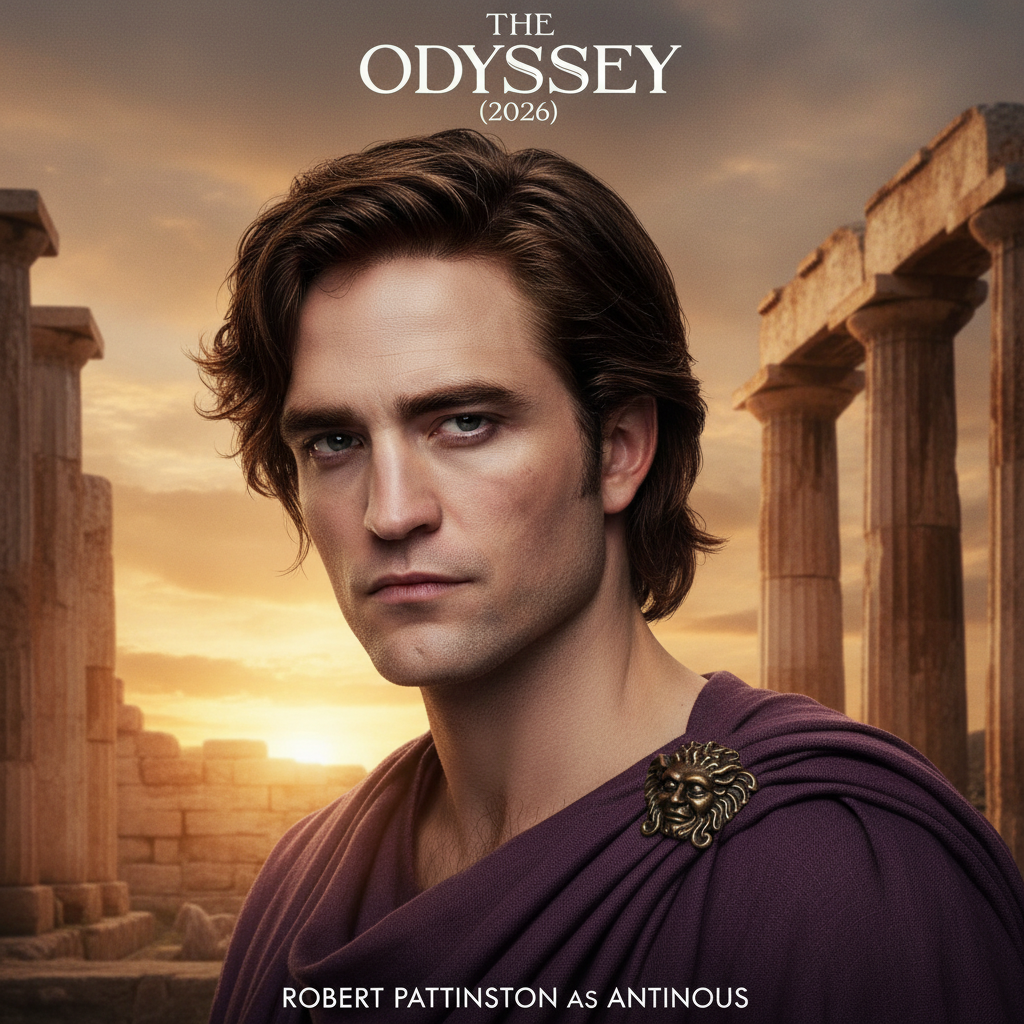
Robert Pattinson
Antinous
Antinous
Robert Pattinson
The leader of the suitors. Arrogant, entitled, and convinced that Odysseus will never return. Antinous has made himself at home in another man's palace, another man's kingdom. He will learn what a mistake that was.
Pattinson has become one of cinema's most fascinating presences. He plays men with hidden rot beneath polished surfaces better than almost anyone working today. Antinous was made for him.
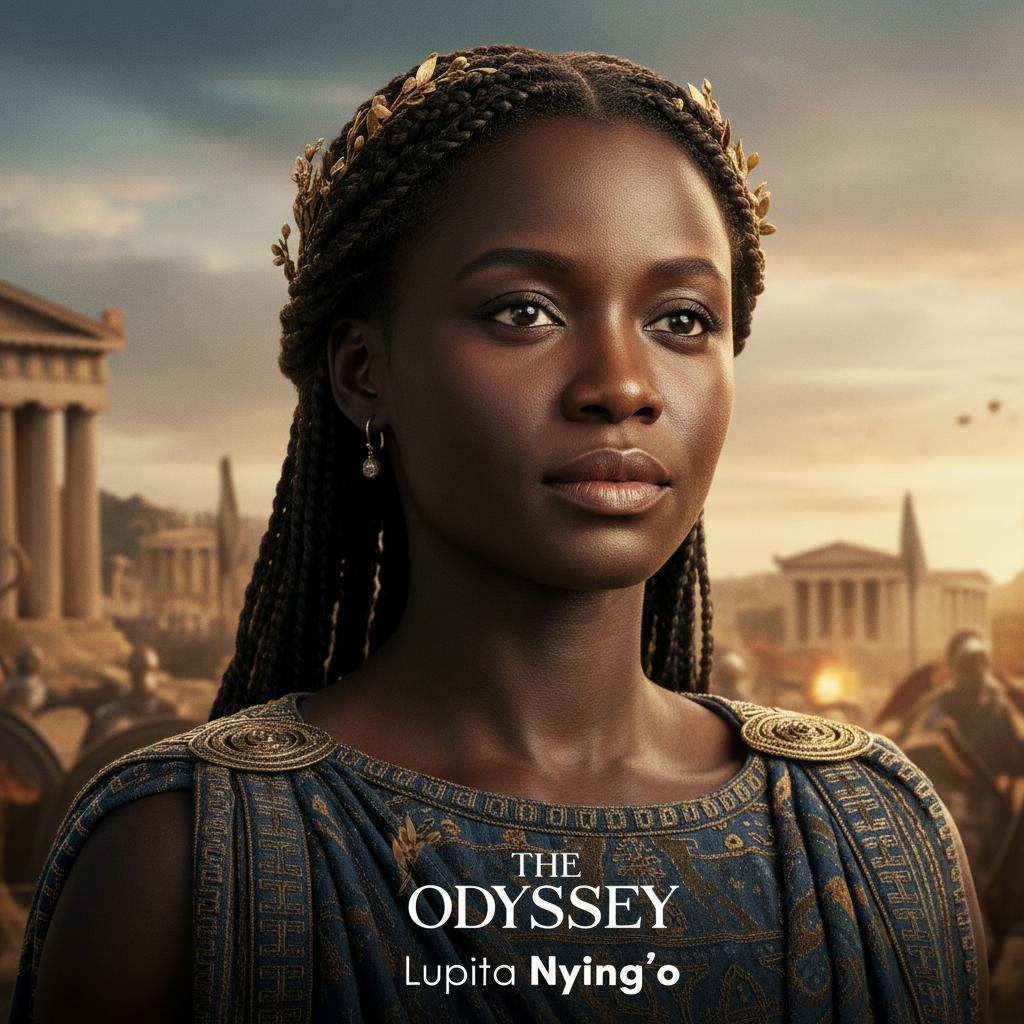
Lupita Nyong'o
Helen of Troy
Helen of Troy
Lupita Nyong'o
The woman whose face, as the poets said, launched a thousand ships. Helen appears in this story as a reflection — a reminder of what the war was for, and what it cost. She is not simply beautiful. She carries the weight of an entire civilization's collapse.
Nyong'o brings an intelligence and gravity to every role she inhabits. Helen of Troy in her hands will not be an icon. She will be a person.
The Trailer — First Look
The official trailer for The Odyssey arrived in late 2025 and immediately became one of the most-watched movie trailers in years. It opened in darkness — the sound of water, the creak of timber — before cutting to a single wide shot of a ship on an impossibly vast, storm-grey sea.
No digital sea. No obvious CGI horizon. Just practical shipwrecks and swirling, ominous seascapes built and filmed in the real world. The trailer confirmed what Nolan had already hinted at in interviews — this film was shot entirely on IMAX 70mm cameras. Every single frame.
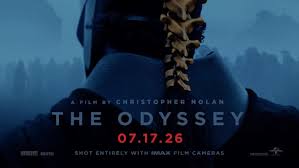
The trailer showcased vast practical seascapes and real-world scale that recalls Dunkirk's visual intensity.
Nolan debuted new footage at a special IMAX 70mm screening alongside Project Hail Mary in early 2026. Audiences described it as overwhelming in scale — images of ancient warships, Greek coastlines, and mythological creatures rendered with a realism that felt nothing like typical sword-and-sandal cinema.
The tone throughout was severe and grounded. No golden light, no flowing toga romanticism. The world of the trailer felt dangerous. The kind of world where a man could disappear for twenty years and no one would be surprised.
Filming was conducted across Greece, Italy, Scotland, and a number of undisclosed practical locations. Nolan is reported to have insisted on in-camera effects wherever possible — a philosophy that has defined his filmmaking since The Dark Knight.
Nolan's Vision
The risk of adapting The Odyssey is the mythology itself. For decades, films set in the ancient world have leaned into the spectacle — gleaming armor, laughably rendered gods, monsters that exist purely to be defeated. They make myth feel like fantasy, and in doing so they drain it of everything that makes it powerful.
Nolan has never once made a film that was purely about spectacle. Dunkirk was a war film with almost no combat. Interstellar was a space epic about a father missing his daughter's childhood. Oppenheimer was a biopic about the most dangerous idea a human being ever had. In every case, the visual scale was in service of something interior.

The Odyssey was shot entirely on IMAX 70mm film — the largest format in cinema history, demanding that every element in frame be physically real.
The Odyssey, approached this way, becomes something different. It is not a film about monsters. It is a film about a man who has been away so long that he no longer knows if home still exists — or if he still deserves it.
Nolan has spoken about Homer's poem as the original adventure story, but also as something psychologically demanding — a portrait of identity under extreme pressure. What does twenty years of war and wandering do to a person? Who is Odysseus when he finally returns? Is he the same man who left? Is anyone waiting for the same man?
The practical approach to production reinforces this. Shooting on IMAX 70mm film — the largest format in cinema history — forces a kind of discipline. Things must be physically real to be photographed. There are no lazy digital shortcuts. The world of the film must actually exist.
In Nolan's hands, the Cyclops will not look like a video game. The sea will not be rendered in a computer. The Sirens will not be a visual effects sequence. Every image in this film will have been earned.
The Original Odyssey — The Story Behind the Story
Homer's Odyssey was composed roughly three thousand years ago, somewhere in ancient Greece, in a culture that transmitted its stories out loud before they were ever written down. It is the sequel to the Iliad — the story of the Trojan War — and begins the moment that war ends.
The central theme is homecoming. In Greek, the word is nostos — the root of our modern word nostalgia. The entire poem is structured around the pull of home, the impossibility of return, and the question of whether the home you remember is the same one you will find when you finally arrive.
Odysseus is not the greatest warrior at Troy. That is Achilles. He is the cleverest. His weapon is his mind. He is the one who devised the Trojan Horse. He wins by thinking, not by fighting. And it is this quality — his intelligence, his restless scheming brain — that makes him both celebrated and cursed. Athena loves him. Poseidon despises him. He offended the god by blinding his son, the Cyclops, and the god has made the sea his enemy ever since.
The journey home is structured as a series of tests. Each encounter on the way — Circe, the Sirens, the land of the dead, Calypso's island — strips something from Odysseus or demands something of him. By the time he reaches Ithaca, he has lost every ship he set out with. Every single member of his crew is dead.
He arrives home alone. Disguised as a beggar. Unrecognized by everyone except his old dog, who wags his tail one final time and dies.
What follows is a reckoning. The suitors are killed. Penelope tests the man who claims to be her husband before she allows herself to believe it. Father and son stand together for the first time. And the poem ends — not with triumph, but with something quieter. Something earned.
Peace. The ordinary, devastating, extraordinary peace of being home.
July 17, 2026. That is the date.
There is something right about Christopher Nolan making this film. His entire body of work has been a slow, meticulous interrogation of the same questions Homer asked — about time, about memory, about the cost of surviving something and still having to live with yourself afterward. He has been circling this story his entire career.
Now he is telling it directly. On the largest format ever put in a camera. With a cast that reads like a generation's worth of talent assembled in one place. In the actual landscapes where the myth was born.
The Odyssey is not just another film. It is the kind of project that comes along once in a decade — the kind that reminds you what cinema is capable of when someone extraordinary decides to take an extraordinary risk.
Odysseus waited twenty years to get home. We can wait until July.
Written by StreamRoulette Editorial
You May Also Like
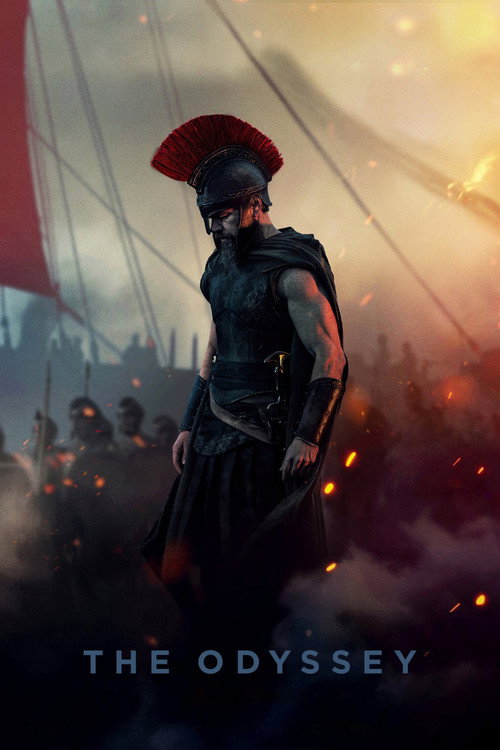


Still looking for something to watch right now?
Let StreamRoulette pick your next obsession instantly.
Try StreamRoulette