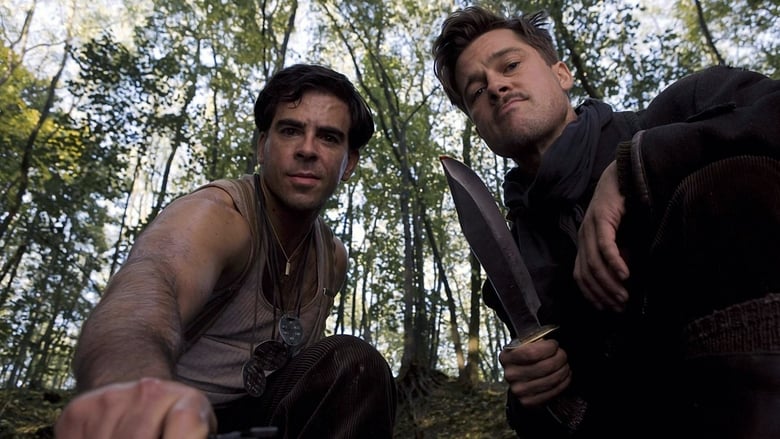
This article contains major spoilers for Inglourious Basterds. Read only if you have already seen it.
Few actors have mastered the art of the charming villain quite like Christoph Waltz. His ability to switch from disarming wit to chilling menace within a single sentence has defined a career that turned a relative unknown into a two-time Academy Award winner in record time.
This guide dives into the performances that defined his legacy, examining the precise linguistic flair and psychological depth that make him one of the most watchable screen presences in modern cinema.
The Arrival of a Titan
Christoph Waltz was not a household name in Hollywood until Quentin Tarantino unleashed him as SS-Standartenführer Hans Landa in 2009. His performance in Inglourious Basterds was a masterclass in tension, turning a polite interrogation into a terrifying game of cat and mouse. Before this breakthrough, Waltz spent decades working in European theater and television, honing a craft that emphasized diction, body language, and a rare ability to control the pace of a scene through silence.
The impact of his collaboration with Tarantino cannot be overstated. It did more than earn him his first Oscar: it established a specific archetype for the modern screen antagonist. Waltz represents a shift away from the brute force villains of the eighties and toward something more dangerous, articulate, and deeply unpredictable.
The screen isn't big enough to contain him. He is a force of nature who can make you laugh while you are terrified for your life.
Hans Landa: The Shadow of Inglourious Basterds
What worked: The linguistic gymnastics. Waltz delivers dialogue in four languages with a cadence that is simultaneously elegant and predatory. He avoids the tropes of the mustache-twirling villain, choosing instead to play Landa as a man who genuinely finds his own intellect superior to everyone else in the room. This makes his sudden pivots to extreme violence feel like a natural consequence of his vanity.
Inglourious Basterds scene 1
What did not work: There is almost nothing to critique here, though some audiences find the film's revisionist history jarring. The performance itself remains a gold standard for acting in a Tarantino script.
The verdict: This is arguably the most iconic screen villain of the twenty-first century. It stands as the definitive performance of his career.
Dr. King Schultz: The Moral Compass in Django Unchained
Following his success as a Nazi officer, Waltz took a sharp turn to play the abolitionist dentist-turned-bounty-hunter in Django Unchained. Dr. King Schultz is the antithesis of Landa. While Landa thrives on fear, Schultz thrives on professional courtesy and a rigid, albeit quirky, moral code. Waltz brings a level of whimsy to the character that balances out the brutal reality of the pre-Civil War South.
Inglourious Basterds scene 2
This performance highlights Waltz's incredible chemistry with his co-stars. Whether he is explaining the legend of Brunhilde or engaging in a polite yet lethal standoff, he maintains a sense of sophisticated playfulness. It is a rare role that allows him to channel his charm toward a heroic end, proving he is just as compelling as a protagonist as he is a villain.
The Menace of Blofeld in Spectre
Stepping into the role of Ernst Stavro Blofeld in the Bond franchise was a daunting task for any actor. Waltz brought a quiet, grounded intensity to the classic villain. He opted for a restrained approach, moving away from the campier iterations of the past to create a man who feels like a genuine, modern threat to global security. He plays the character as a shadow from the past, looming over Bond with a mixture of resentment and icy patience.
Waltz is the perfect foil for Bond because he doesn't need to shout to be heard. He controls the room by simply existing within it.
Walter Keane: The Fragile Ego in Big Eyes
In Tim Burton's Big Eyes, Waltz plays a character fundamentally different from his usual genre work. As Walter Keane, he portrays a man built on insecurity and fraud. The performance is a fascinating study of a narcissist crumbling under the weight of his own lies. Waltz captures the manic energy of a man who knows he is a sham but refuses to stop the charade.
Inglourious Basterds scene 3
The film showcases his range in a more grounded, dramatic setting. He leans into the theatricality of the character, treating Walter's life as a performance that must be maintained at all costs. It serves as a reminder that even when he is playing a smaller, more pathetic villain, he retains the same magnetic screen presence he brings to larger-than-life roles.
Conclusion: The Waltz Signature
The consistent thread throughout his work is a commitment to the rhythm of the language. Waltz treats every line as a musical score, knowing exactly where to pause and where to accelerate. He has mastered the ability to remain static while his eyes convey a dozen conflicting emotions, keeping the audience locked on his every movement.
Ultimately, Christoph Waltz has redefined what it means to be a character actor in a blockbuster era. By refusing to sacrifice nuance for spectacle, he ensures that every role feels like a deliberate creation. Whether he is fighting for justice or orchestrating chaos, he remains the most intriguing person on screen.