Why Audiences Love Ambiguous Movie Endings

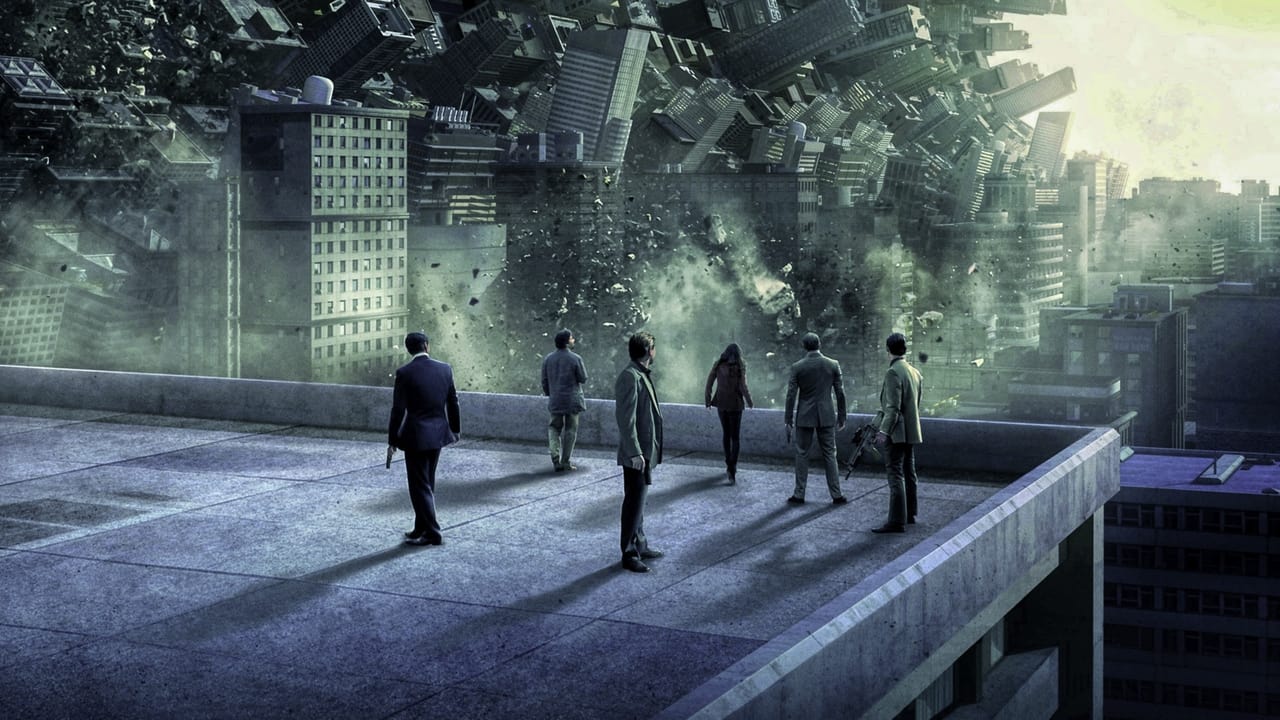
There is a particular kind of frustration that audiences feel when a film refuses to answer its own central question. The spinning top at the end of Inception. The cut to black in The Sopranos. The origami unicorn in Blade Runner. These moments do not conclude stories. They detonate them. They turn every viewer into a detective, every conversation into an argument, and every rewatch into a search for clues.
Critics of ambiguous endings call them lazy — a refusal to commit, a cop-out dressed up as profundity. The evidence suggests the opposite: ambiguity is the most demanding form of storytelling because it asks the audience to participate in creating the meaning of the work.
The Psychology of Ambiguity
The Zeigarnik Effect, named after psychologist Bluma Zeigarnik, describes the human tendency to remember incomplete tasks better than completed ones. An unfinished story occupies the mind in a way that a resolved one does not. An ambiguous ending exploits this cognitive quirk: the film never closes, so your brain never stops working on it. The film continues long after the credits have rolled — not on the screen, but inside your head.
This is not a defect. It is a feature. A story that answers every question is a story that allows you to walk away. A story that refuses to answer its central question demands that you stay. You become a participant in the narrative, filling in the spaces the filmmaker deliberately left empty. The experience of watching Inception does not end when Cobb spins the top. It ends when you decide whether the top falls — and every person's decision is different.
The Great Ambiguous Endings
The best ambiguous endings do not withhold information. They provide all the information you need and then refuse to tell you what it means. The Sopranos finale gives you everything: the onion rings, the jukebox, the suspicious man at the counter, the bathroom. David Chase constructed the sequence with such meticulous precision that every viewer can reconstruct the events that would have followed the cut to black. But the film does not show them. The absence is the point.
Blade Runner's origami unicorn is another masterwork of this form. The film gives you enough evidence to conclude that Deckard is a replicant — Gaff's origami, the photographs, the dream — but it never confirms it. Ridley Scott has said Deckard is a replicant. Harrison Ford has said he is not. The film allows both interpretations to coexist, and the fact that the debate has lasted 40 years is the proof that the ambiguity works.
"An ending that answers every question is a closed door. An ending that refuses is a door left open — and the audience will keep walking through it forever."

When Ambiguity Fails
Ambiguity fails when it is used as a substitute for having something to say. A film that refuses to answer its own questions because the filmmaker never decided what the answers were is not ambiguous — it is evasive. The difference between Inception's ending and, for example, the ending of Lost, is that Inception's ambiguity is the culmination of its themes (perception, reality, choice), while Lost's ambiguity was the result of a story that had introduced more mysteries than it could possibly resolve.
The test of a good ambiguous ending is whether it deepens the film or merely postpones its conclusion. A well-constructed ambiguity rewards rewatches. Every time you return to The Sopranos finale, you notice something new — the bell on the door, the position of the truck, the way the editing pattern changes in the final scene. A poorly constructed ambiguity feels random, arbitrary, and unsatisfying. The difference is the difference between a puzzle and a shrug.
Why Audiences Keep Coming Back
The audiences who complain about ambiguous endings are often the same audiences who cannot stop thinking about them. The very thing that frustrates them is what keeps them engaged. This is not an accident. It is the result of filmmakers who understand that storytelling is not about providing answers — it is about raising questions so compelling that the audience cannot stop trying to answer them.
The films we argue about the most are the ones that refuse to give us closure. The Sopranos. Inception. Blade Runner. Shutter Island. The Prestige. These are not the only great films of their respective eras. But they are the ones that refuse to let go of us — because we have never been able to let go of them.
Written by StreamRoulette Editorial
You May Also Like


Not Sure What to Watch Next?
StreamRoulette picks your next film in seconds — based on mood, genre, or platform.
Try StreamRoulette