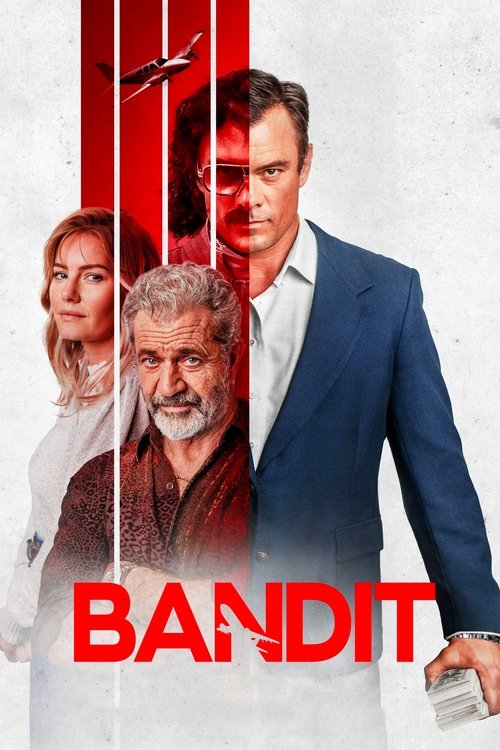
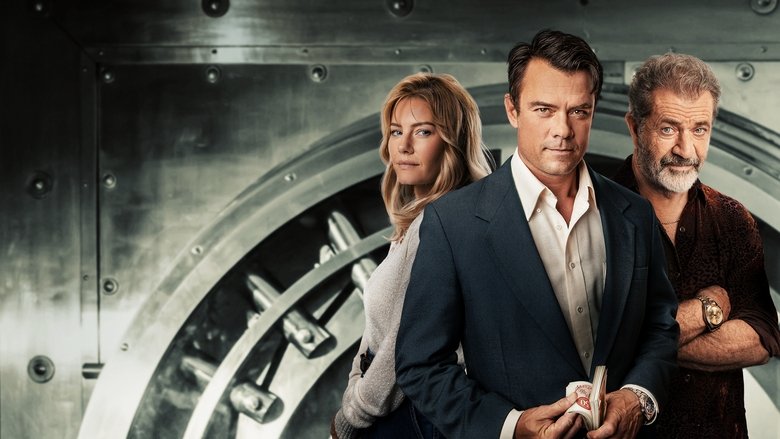
This article contains major spoilers for Bandit. Read only if you have already seen it.
In the mid-1980s, a charming American fugitive crossed the border into Canada and embarked on a crime spree so audacious that it set a national record. While the authorities scrambled to identify the man behind the disguises, he was busy flying first-class across the country to rob banks, all while maintaining a quiet, suburban life with a wife who had no idea he was a career criminal.
The 2022 film Bandit brings the life of Gilbert Galvan Jr. to the screen, showcasing his transformation into the Flying Bandit. This article explores the historical context of his crimes, the reality of his double life, and how much of the movie aligns with the true story of Canada's most notorious bank robber.
The Man Behind the Alias
Gilbert Galvan Jr. was an American career criminal who, after escaping from a Michigan prison in 1984, fled to Canada to start anew. He adopted the name Robert Whiteman and eventually settled in Pembroke, Ontario. To his neighbors and his wife, Janice, he appeared to be a successful, albeit busy, business consultant who frequently traveled for work. In reality, he was using his frequent flyer status to execute a series of bank and jewelry store robberies that spanned almost every Canadian province.
The reality of his method was surprisingly simple yet effective. Galvan would fly into a city, check into a hotel, and use a variety of disguises to rob banks without ever firing a shot. He relied on his charm and the element of surprise, often passing notes to tellers. Because he traveled by air, he was able to bypass the security measures that would have caught a criminal driving across provincial lines, allowing him to transport his weapons and disguises in his checked luggage.
The Bandit true story reveals that the real Gilbert Galvan robbed almost 50 banks over a period of three years, a Canadian record. At his height, he committed 21 robberies in a single year.
The Flying Bandit's Double Life
The domestic facade maintained by Galvan was perhaps his most impressive feat. His wife, Janice, believed he was a courier for stocks and bonds, often driving him to the airport for his supposed business trips. She remained completely unaware of his criminal activities until his eventual arrest. This contrast between his mundane, middle-class life in Pembroke and his high-stakes criminal career is a central theme in the film, highlighting the lengths to which he went to keep his two worlds separate.
Bandit scene 1
The nickname that defined his career was coined by journalist Ed Arnold, who later co-authored the book The Flying Bandit with Robert Knuckle. The moniker was a direct reference to his habit of flying first-class to commit his crimes. By the time he was caught, he had accumulated 160,000 frequent flyer miles with Air Canada, a testament to the sheer scale of his travel-based crime spree.
Fact vs. Fiction in the Film
What the movie gets right is the core of the narrative: the escape from prison, the adoption of the Robert Whiteman alias, the marriage to a woman who was kept in the dark, and the partnership with a local fence. The character of Detective John Snydes, played by Nestor Carbonell, is based on the real-life Ontario Provincial Police officer George Snyder, who led the long-term investigation into the robberies. Snyder was famously impressed by Galvan's professionalism, noting that he was the best bank robber he had ever encountered.
What the movie embellishes is largely for the sake of pacing and dramatic tension. While the film portrays the robberies as highly elaborate, the real Galvan often relied on simple disguises and his own calm demeanor. The character of Tommy, played by Mel Gibson, is based on the real-life fence Tommy Craig, known as the Fat Man. While the two were indeed associates, the extent of their partnership and the specific heists they collaborated on were dramatized to fit the structure of a feature film.
Bandit scene 2
He would be impeccably dressed in the best suits. As he approached a bank, that's what you would see, a businessman carrying an attaché case, impeccably dressed. — Officer George Snyder
The Downfall and Aftermath
The investigation that finally brought Galvan down was a result of meticulous police work. Investigators tracking stolen goods in the Ottawa area eventually linked the credit card and airline receipts of Robert Whiteman to the robberies. When they finally surveilled his home in Pembroke, they gathered enough evidence to end his three-year spree. Upon his arrest in 1987, Galvan had reportedly been planning to confess to his wife and flee to the Turks and Caicos Islands.
The legal consequences were severe. Galvan pleaded guilty to 59 armed robberies and was sentenced to 20 years in prison. After his release and subsequent deportation to the United States, he struggled to leave his criminal past behind, eventually committing more bank robberies in Illinois in the early 2000s. His life remains a fascinating study of a man who was exceptionally talented at the wrong profession.
Bandit scene 3
The Verdict
What worked: Josh Duhamel delivers a career-best performance, capturing the charisma and underlying desperation of a man who could not stop stealing. The film succeeds as a character study, focusing on the psychological toll of living a double life rather than just the mechanics of the heists.
What did not work: Some critics felt the film could have been sprightlier, as the middle section occasionally drags under the weight of its own procedural elements. The transition between his domestic life and his criminal exploits sometimes feels disjointed, though this may be an intentional reflection of his fractured reality.
The verdict:Bandit is a compelling, well-acted crime drama that serves as a solid introduction to one of Canada's most bizarre true crime stories. It is a must-watch for fans of Catch Me If You Can who enjoy stories about charming, intelligent criminals who manage to stay one step ahead of the law for as long as possible.