
Supergirl: Woman of Tomorrow Soars on Milly Alcock and Stumbles on Everything Else

The second film in James Gunn's DC Universe arrives with an unusual burden. Where Superman had to relaunch a franchise, Supergirl has to justify its own existence as a standalone story before it can earn the right to be a launchpad. Directed by Craig Gillespie and based on the acclaimed Tom King and Bilquis Evely comic, Supergirl: Woman of Tomorrow opened in theaters on June 26 to a reception that can only be described as divided.
The film has a genuine star in Milly Alcock and a source material that is arguably the best Supergirl story ever printed. It also has a Rotten Tomatoes score hovering near fifty percent and a CinemaScore of B minus. The gap between what this film could have been and what it is is the whole conversation.
Spoiler Warning: This article discusses the full events of Supergirl, including the plot, the ending, and the fate of Krypto. If you have not seen the film yet, bookmark this and come back. You will want to go in clean.
To understand why the reception is so split, you have to understand the comic it comes from. Supergirl: Woman of Tomorrow, the 2021 series by Tom King and Bilquis Evely, is not a conventional superhero story. It is a science-fiction western about grief, told in eight issues, following Kara Zor-El across alien worlds as she accompanies a young girl named Ruthye on a quest for revenge. It is quiet, brutal, and formally ambitious. It is also widely considered one of the best comics of the last decade. Adapting it was always going to be a high-wire act, and the film walks that wire with mixed results.
Milly Alcock Is the Reason This Film Works at All
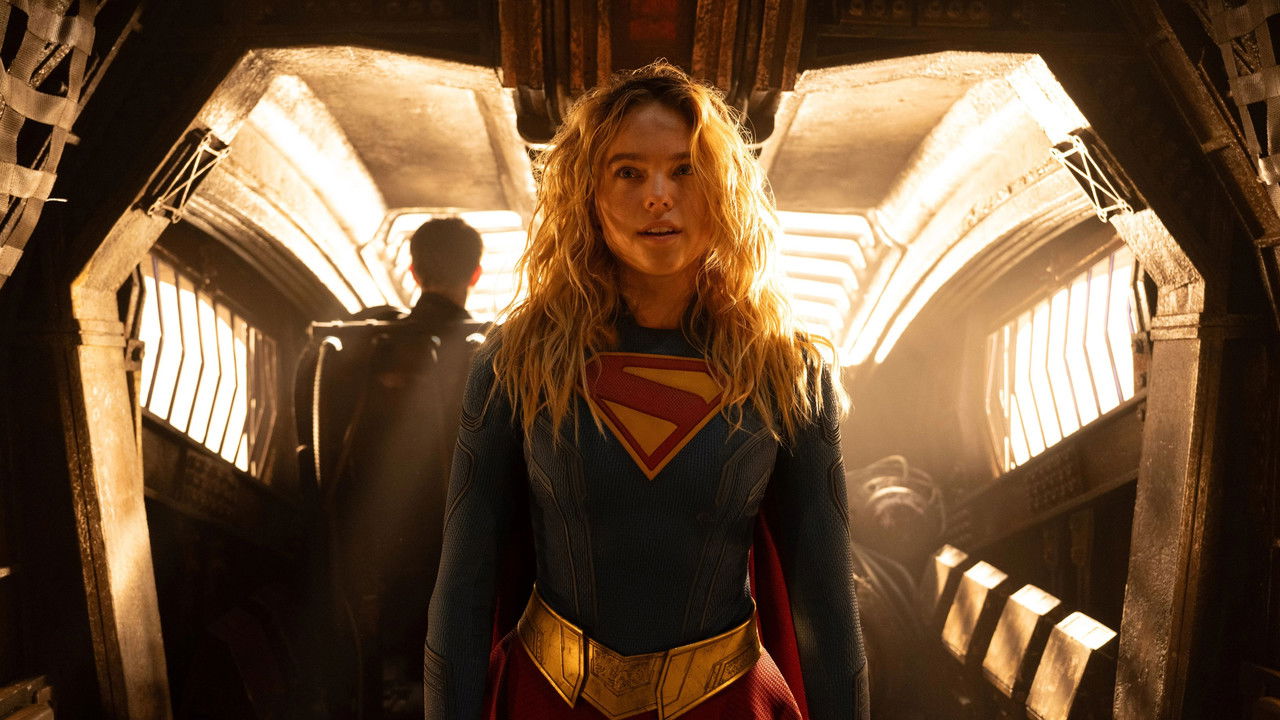
If the film has a single unambiguous success, it is Milly Alcock. The House of the Dragon breakout was a casting announcement that felt instantly right, and she delivers on the promise. Her Kara Zor-El is not the cheerful cousin who shows up to help Superman. This is a survivor of a destroyed planet carrying grief she will not name, and Alcock plays the distance in her with a stillness that the rest of the film sometimes lacks.
The performance works because Alcock understands that Kara's power and Kara's pain are the same thing. She is stronger than nearly everyone around her, and that strength is a wall as much as a gift. The moments where the film lets her sit in silence, staring at a sky that reminds her of a home she lost, are the moments where Supergirl becomes the film it wanted to be. The tragedy is that there are not enough of them.
Reddit's r/DC_Cinematic post-release threads converged on this read fast. Even the harshest reviews singled Alcock out as the element that worked, and several highly upvoted comments argued that the film is worth seeing for her alone. The DCU has its Supergirl. The problem is everything around her.
"Milly Alcock is the best thing in the movie by a mile. She sells grief and power as the same gesture. I just wish the film trusted her enough to let her carry it." — r/DC_Cinematic discussion thread
The Krypto Engine: Grief in a Cape
The film's central plot is, at its core, a grief story wearing a superhero costume. Gillespie said as much at a December event, calling the film an anti-hero story. The engine that drives the entire chase is brutally simple. Krem of the Yellow Hills, played by Matthias Schoenaerts, poisons Kara's dog Krypto with a dart that gives the animal only three days to live. Kara launches across multiple star systems to find a cure and make Krem answer for it.
That premise is a strong hook because it gives Kara a motivation that is personal rather than planetary. It is also the source of the film's most divisive quality. A story about a poisoned dog is either going to break your heart or feel like a trick, and the reception split almost exactly down that line. The viewers who bought the emotional stakes loved the film. The viewers who did not found the whole chase hollow.

The Variety review captured the split precisely, calling the film True Grit meets John Wick meets Mad Max Fury Road with the usual random assortment of needle drops, and noting that the failure to find emotional depth in the sisterhood of Kara and Ruthye is notable. That is the criticism that has stuck. The film has the ingredients of a grief story and the instincts of an action movie, and it never fully reconciles the two.
The Villain Problem
If Alcock is the film's clearest success, Krem of the Yellow Hills is its clearest failure. Matthias Schoenaerts is a tremendous actor, but the character he is given is thin. Krem is a plot device more than a person, a reason for Kara to run rather than a threat that earns the running. The comic version of Krem is a study in banal cruelty. The film version is a marker the story moves toward, and the difference matters.
The IMDb user reviews hit this note repeatedly. One called the villain one of the weakest points of the film, more plot device than compelling threat. When your entire film is a chase, the thing being chased has to matter, and Krem never quite does. Schoenaerts does what he can with the physicality, but the writing gives him nothing to hold onto, and the film suffers for it in every scene he is not in.
"The story is simple, and that should work in its favor. Instead the villain is a cardboard cutout and the chase starts to feel like a commute." — r/movies review thread
Lobo: The Energy the Film Needed
The casting announcement that got the most attention was Jason Momoa as Lobo, and the film knows exactly what it has in him. Lobo is the intergalactic bounty hunter who has been a fan-favorite DC character for decades, and Momoa plays him as a force of chaos that the otherwise restrained film badly needs. Every scene he is in wakes the movie up.
The dynamic between Kara and Lobo is the film's most reliable pleasure, and Momoa and Alcock have spoken in press about the clashing personalities at the center of it. Where Kara is grief held in check, Lobo is appetite with no brakes. The film does not always know what to do with that contrast, but when it lets the two share a frame, the tension is real. Several Reddit threads argued Lobo should have been given more to do, and it is hard to disagree.
Eve Ridley as Ruthye Marye Knoll is the emotional anchor the comic depends on, and she is asked to carry a lot of the film's feeling. She is game for it, and the scenes between her and Alcock are the closest the film gets to the sisterhood the source material is built on. The writing does not always give those scenes room to breathe, but the intent is there, and the casting is right.

The Ending: A Landing It Does Not Quite Stick
Spoilers from here. The ending of Supergirl is the moment the whole film has been building toward, and it is the moment where the divided reception makes the most sense. The chase resolves, Krem is confronted, and Kara is forced to choose between the revenge Ruthye wants and the mercy Kara believes in. It is the same moral knot the comic unties across eight issues, and the film gets the shape of it right.
What it does not get is the weight. The comic earns its ending through accumulation, through the slow build of small moments that make the final choice feel inevitable rather than imposed. The film, working in under two hours, has to shortcut that accumulation, and the resolution lands as a statement rather than a feeling. Krypto survives, which is the relief the audience needs, but the larger emotional arc closes more tidily than the story it came from would allow.
The butwhytho review put it bluntly, arguing that Woman of Tomorrow was perhaps not the right first movie, and that the comic deserves a full-length adaptation the film is not. That is the read that has gained the most traction among readers of the source material. The film is faithful to the bones of the story. It does not always have the runtime or the confidence to be faithful to its soul.
"The ending is right on paper and wrong on screen. The comic makes you earn it over eight issues. The film asks you to feel it in ninety minutes, and the math does not work." — r/DC_Cinematic book readers thread

What Fans Are Saying
The reception has been one of the more fractured DC conversations in recent memory, and the divide tracks almost exactly with how much credit the viewer is willing to extend. The Rotten Tomatoes critics score sits near fifty percent, the audience response is warmer but still mixed, and the CinemaScore of B minus is the kind of grade that signals a film people respected more than loved.
The defenders: A vocal group of fans, many of them readers of the comic, have pushed back hard against the critical consensus. The Under the Radar review argued the film is better than you have been led to believe, and several Reddit threads insisted that critics who had not read the source material were grading the film against expectations it never set. For this camp, Alcock and the emotional core are enough.
The critics: The other camp points to the pacing, the visual effects, and the villain. The IMDb reviews that called the film a nothing burger and complained that every exterior scene looks like a green screen are representative of the harshest read. For this group, the film has the right star and the wrong everything else.
The middle: The largest group is the one that liked it without loving it. These viewers praised the casting, the action, and the soundtrack, and noted that the film has charm and personality even when it does not have depth. That is a fair summary of where the consensus actually lands. Supergirl is a film with a clear ceiling and a real floor, and most people land somewhere between them.
What It Means for the DCU
The bigger question is what Supergirl tells us about the DCU James Gunn is building, and the honest answer is that it tells us less than either the studio or the fans hoped. The film launches a new era with cosmic force, as the Rotten Tomatoes consensus put it, but it also launches it with a question mark. If Superman was the proof of concept, Supergirl is the first real stress test, and the results are inconclusive.
The Alcock investment: The one certainty the DCU takes from this film is that Milly Alcock is worth building around. Whatever the franchise does next with Kara, it has a lead who can carry it, and that is not a small thing to come out of a mixed reception with.
The Lobo question: Momoa's Lobo is the element most likely to spawn its own future, and the fan response to him has been the most uniformly positive part of the conversation. Do not be surprised if the bounty hunter gets more screen time in the DCU than this film alone suggests.
The adaptation lesson: The broader takeaway for the DCU is a cautionary one. Woman of Tomorrow is a comic that works because of its form, and form is the hardest thing to carry from page to screen. The next time the franchise reaches for a prestige comic run, it will have to decide whether it is adapting the story or the structure, and Supergirl suggests those are not the same task.
Our Take
Supergirl: Woman of Tomorrow is a film with a great star, a great comic, and a finished product that is neither great nor bad. It is the most frustrating kind of movie, the kind where you can see the better film hiding inside the one you got.
What worked: Milly Alcock is a real find, and her Kara is the version of the character the DCU should build on. The Krypto premise gives the film an emotional engine it can actually start, and Lobo brings an energy the rest of the film lacks. The ambition is real. The film is trying to be a grief story in a cape, and that is a worthier goal than most superhero films set for themselves.
What did not work: The villain is a void, and a chase film cannot survive a void at its center. The pacing sags in the middle, the visual effects are uneven, and the ending resolves more neatly than the source material would allow. The film reaches for the comic's soul and grabs its skeleton instead.
The verdict: Supergirl is worth seeing for Alcock alone, and it is a better film than its worst reviews suggest and a lesser one than its best reviews claim. It is a movie with a clear ceiling and a real floor, and most viewers will land somewhere in between, admiring what it tried and wishing it had tried a little longer. The DCU has its Supergirl. Now it has to figure out what to do with her.
The Woman of Tomorrow is here. She just arrived in a film that is not quite ready for her.
Written by StreamRoulette Editorial
You May Also Like



Want More Cosmic Superhero Films That Stick the Landing?
StreamRoulette finds the best comic-book and sci-fi films to stream tonight. Spin by genre and let the algorithm pick your next watch.
Try StreamRoulette