
Moneyball True Story: What the Movie Changed About Billy Beane and the 2002 A's

Bennett Miller's Moneyball (2011), starring Brad Pitt as Oakland Athletics general manager Billy Beane and based on Michael Lewis's 2003 book, is one of the most beloved sports films of its decade. It tells the story of a small-budget baseball team that used statistical analysis to outsmart richer rivals. The bones of the story are true. The character at its center is not.
The short answer: the 2002 Athletics, the 20-game win streak, and Billy Beane's statistical approach are all real. The Jonah Hill character, Peter Brand, is fictional, a composite the real Paul DePodesta asked not to be named.
Quick Answer
Moneyball follows the 2002 Oakland Athletics, whose general manager Billy Beane (Brad Pitt) embraced sabermetrics, the statistical analysis of baseball, to find undervalued players after losing his stars to richer teams. With the help of a young analyst (Jonah Hill), Beane builds a roster around on-base percentage and triggers a historic 20-game winning streak. The film is closely based on real events and real people, with one major composite character and several dramatized conflicts.
TL;DR: Remarkably faithful to the real season and the real idea, with a fictional assistant and sharpened locker room drama.
The Real Story
Billy Beane was a former major league player who became the Oakland Athletics general manager in 1997. The Athletics were one of the poorest teams in baseball, unable to compete with the payrolls of the Yankees or Red Sox. After the 2001 season, Oakland lost three of its best players, Jason Giambi, Johnny Damon, and Jason Isringhausen, to free agency. Rather than replace them with expensive veterans, Beane and his assistant Paul DePodesta used statistical analysis to find players whose skills, particularly on-base percentage, were undervalued by the traditional scouting market.
The strategy worked. The 2002 Athletics went on a 20-game winning streak, the longest in American League history at the time, and reached the playoffs. The approach Beane and DePodesta pioneered spread through baseball and then through every major sport. Michael Lewis's book made the story famous, and the film made it a movie.
"Other than that Peter Brand is not the real name of the man, the rest of the movie is scarily accurate, down to little details." — a report on the real Paul DePodesta, who became a front office executive in several sports leagues.

What the Movie Gets Right
The 2002 season: The Athletics really did lose their top players to free agency, really did turn to statistical analysis, and really did win 20 consecutive games between August and September 2002. The streak is one of the most famous in baseball history.
The idea: The film accurately captures the core of sabermetrics, that traditional scouting overvalued some skills and undervalued others, particularly the ability to get on base. Players like Scott Hatteberg, a catcher with a bad elbow converted to first base for his on-base ability, and the sidearm reliever Chad Bradford, were real and were acquired for the reasons the film shows.
Billy Beane: The real Beane was a top prospect whose playing career disappointed, which informed his belief that scouts could be wrong. He cooperated with Lewis's book and is broadly well portrayed, though the film heightens his intensity and his conflicts.
What the Movie Changes
Peter Brand is fictional: The Jonah Hill character is a composite of Beane's assistants, primarily Paul DePodesta. DePodesta did not want his name or likeness used, in part because the book had given him a reputation as a cold calculator that he felt was inaccurate. The role was originally written for DePodesta's name and was to be played by Demetri Martin, but DePodesta declined. Director Bennett Miller credited DePodesta for being generous and helpful despite the change.
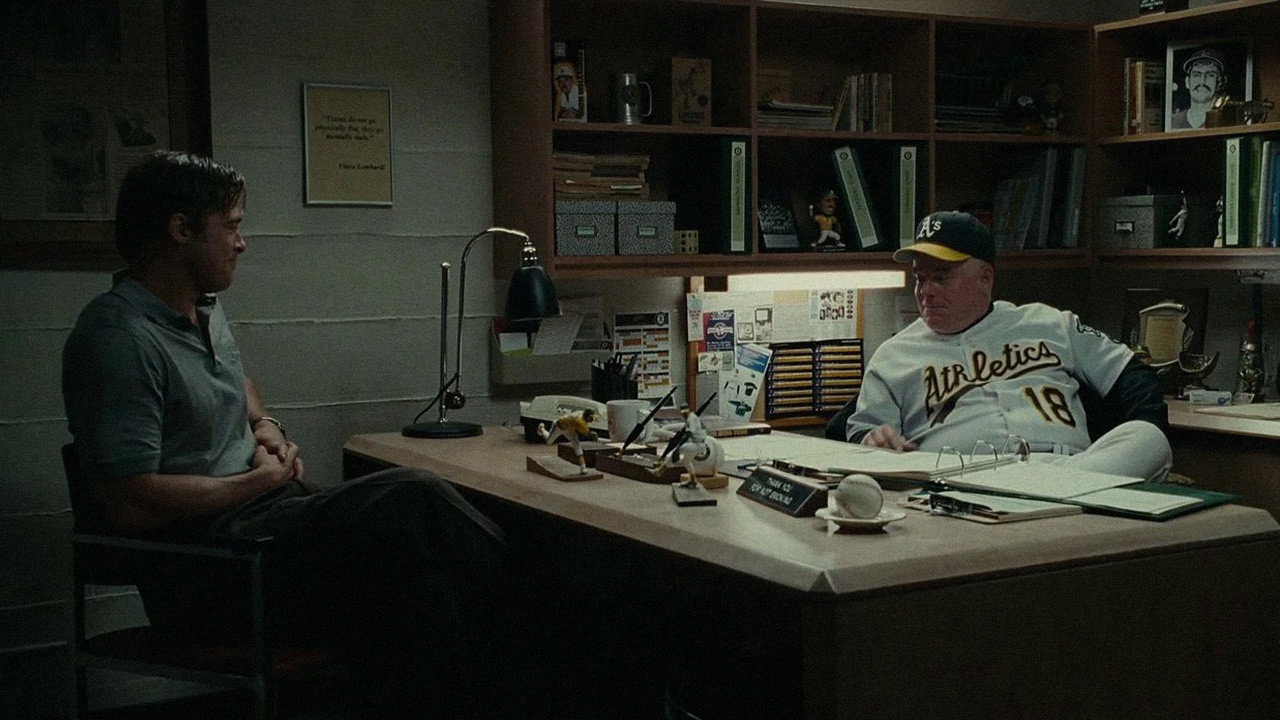
The Art Howe conflict: The tension between Beane and manager Art Howe, who wanted to play his veterans while Beane wanted his statistical lineup, is dramatized. The real friction existed but was less personal than the film suggests. Howe, who went to the Mets after the 2002 season, was unhappy with his portrayal.
The Grady Fuson scene: The dramatic confrontation in which Beane fires his head scout is compressed and sharpened. Fuson was a real scout who left the organization, but the manner of his departure is dramatized.
Real People vs Composite Characters
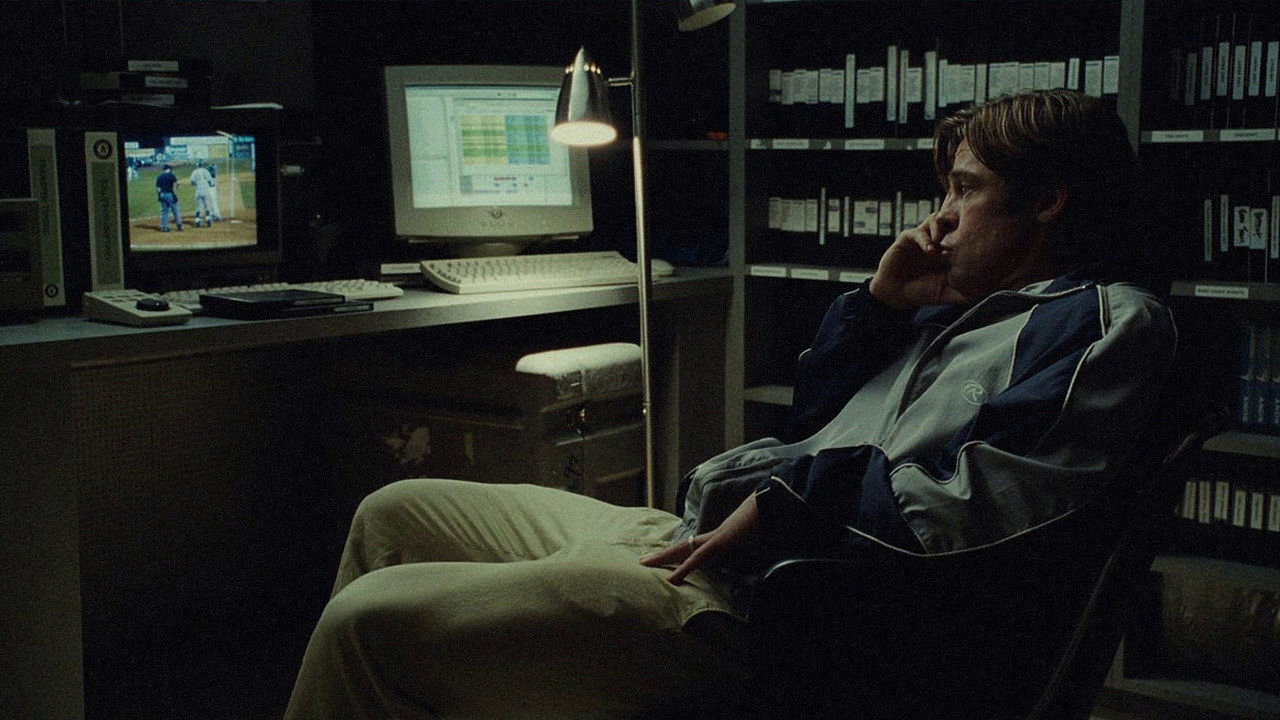
Billy Beane, manager Art Howe (Philip Seymour Hoffman), scouts Grady Fuson and Ron Washington, and players Scott Hatteberg and Chad Bradford are all real. The one major fictional character is Peter Brand, the analyst played by Jonah Hill, who stands in for Paul DePodesta. DePodesta has said the book gave him a reputation as a cold calculator that did not match reality; he played football at Harvard and wanted to be a football coach, not the numbers-only figure the story made him. The composite was a compromise that let the film use the role without using the man.
Invented Scenes and Dramatized Events
The scouting room: The sharp conflicts between Beane and his old-school scouts in the draft room are heightened for drama. The real debates were real, but the personal animosity is sharpened.
The trade for Ricardo Rincon: The tense scene in which Beane trades for a reliever at the waiver deadline to lock in the streak compresses real wheeling and dealing into a single dramatic transaction.
The daughter's song: The recurring scenes of Beane's daughter singing and playing guitar are a screenwriting device to humanize Beane and give the film an emotional throughline. The daughter is real, but the specific scenes are invention.
"Moneyball is a film about a man who learned that the people who evaluate talent are often wrong, because he was once the talent they were wrong about." The real Beane carried the lesson of his own failed playing career into every decision he made as a general manager.
Timeline of the Real Events
1997: Billy Beane becomes general manager of the Oakland Athletics.
1999: Paul DePodesta joins the Athletics front office.
2001: Oakland loses Giambi, Damon, and Isringhausen to free agency.
August 2002: The Athletics win 20 consecutive games.
October 2002: Oakland reaches the playoffs but loses in the first round.
2003: Michael Lewis publishes Moneyball, which becomes a bestseller and changes sports management.
Why Hollywood Changed the Story
A film about statistics and baseball front offices needed a human face. The composite analyst gives the audience a guide. The sharpened conflicts give the film tension it would otherwise lack. The daughter gives Beane a private life. The real story, that a team used better math and won more games than its budget predicted, is true and important, but it is not dramatic on its own. The film added the drama the real season did not need.
Historical Context
Moneyball is a story about the moment sports stopped being decided only by tradition and scouting and started being decided by data. The approach Beane and DePodesta pioneered in Oakland spread to every major sport within a decade. The book and the film made the idea famous beyond baseball. The Athletics never won a World Series with the strategy, but they proved that a poor team could compete, and that proof changed how every team in every sport was built.
Frequently Asked Questions
Is Moneyball based on a true story?
Yes. The film is based on Michael Lewis book of the same name about the 2002 Oakland Athletics and general manager Billy Beane, who used statistical analysis to build a competitive team on a small budget. The 20-game win streak was real.
Was Peter Brand a real person?
No. Peter Brand, played by Jonah Hill, is a composite character based on Billy Beane assistant Paul DePodesta, who asked not to have his name or likeness used in the film. DePodesta said the character was not an accurate representation of any specific person.
Did the Oakland Athletics really win 20 games in a row?
Yes. The 2002 Athletics set the American League record with 20 consecutive wins, which is the centerpiece of the film. The streak ended on August 14, 2002.
Did Billy Beane really trade away his best players on purpose?
Beane did make bold moves driven by budget constraints and statistical value, including letting expensive players leave, but the film dramatizes the conflicts with manager Art Howe and the timing of some moves for narrative effect.
Final Verdict
Moneyball is one of the most faithful sports biopics ever made. The season, the streak, the players, and the central idea are all real and accurately rendered. The one significant fiction is Peter Brand, a composite the real analyst asked for, and the sharpened conflicts with the manager and scouts. If you want to understand how data changed sports, the film is an excellent and largely accurate introduction. If you want the full story, read the book, which is better than the film and which the film honors.
The Athletics proved a small market could win with the right ideas. The film proved the same idea could become a great movie.
Related True Story Guides
Written by StreamRoulette Editorial
You May Also Like


Not Sure What to Watch Next?
StreamRoulette picks your next film in seconds — based on mood, genre, or platform.
Try StreamRoulette