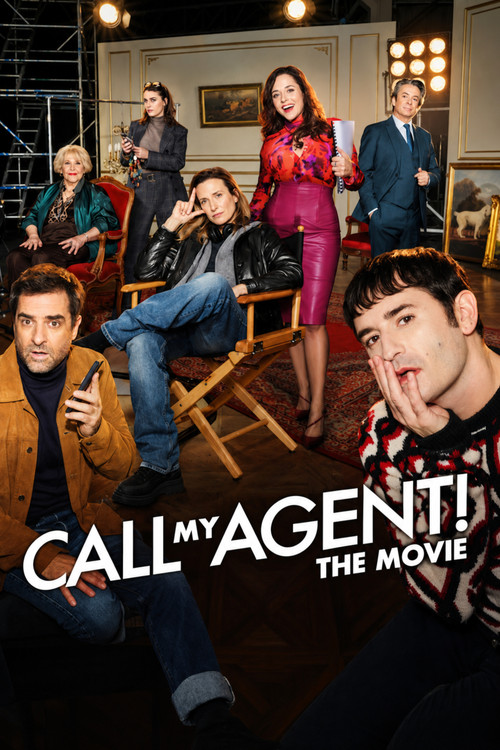
The French sensation Call My Agent! (Dix pour cent) proved that the most compelling drama often happens behind the camera rather than in front of it. Between the frantic power plays, ego-driven crises, and the constant threat of A-list defection, it turned the mundane reality of talent management into an addictive, high-stakes sport.
If you miss the fast-paced wit and glamorous backstabbing of the ASK agency, these five series perfectly capture the absurdity of show business, blending sharp industry satire with surprisingly grounded character arcs.
The Entourage of Agency Life: The Larry Sanders Show
Before we had modern streaming gems, The Larry Sanders Show set the gold standard for industry cynicism. By pulling back the curtain on the late-night talk show format, it exposed the fragile egos and corporate machinery that keep television running. Much like Call My Agent!, it thrives on the contrast between the polished public facade and the chaotic, often petty reality behind the scenes.
What worked: The show pioneered the single-camera, documentary-style aesthetic that became the industry standard for comedy. What did not work: Some viewers may find the 90s pacing slower compared to today’s frenetic editing, but the satire remains razor-sharp. The verdict: An essential viewing for anyone who loves seeing the "fake" side of fame dissected with surgical precision.
The show is a masterclass in professional insecurity, proving that even the most successful figures are often the most lost when the cameras stop rolling.
The Dark Mirror of Hollywood: Episodes
Episodes offers a meta-narrative that is as hilarious as it is painful. When a successful British writing duo is brought to Hollywood to adapt their hit series for American television, they quickly realize their vision is being gutted in favor of casting Joey Tribbiani from Friends. It perfectly encapsulates the "fish out of water" trope while delivering a biting critique of network executive interference.
Call My Agent! scene 1
What worked: Matt LeBlanc playing a fictionalized, narcissistic version of himself is pure brilliance. What did not work: The show occasionally leans into slapstick that contradicts its more intellectual industry observations. The verdict: A must-watch for those who enjoyed the clash of artistic integrity versus commercial success found in Call My Agent!.
Episodes works because it doesn't just mock Hollywood; it understands the desperate, lonely heart that beats at the center of the industry machine.
The Fashionable Frontlines: The Devil Wears Prada
While technically a film, its thematic DNA is identical to the best episodes of any talent agency drama. It explores the high-pressure, high-fashion world through the eyes of an outsider, showcasing the extreme demands of a perfectionist boss. The internal politics of the magazine office mirror the high-stakes navigation of an agent’s day-to-day life.
Call My Agent! scene 2
What worked: Meryl Streep’s performance remains the benchmark for the "impossible boss" character archetype. What did not work: The moralizing ending feels slightly forced compared to the gritty realism of the workplace scenes. The verdict: It remains the quintessential entry point for the genre of 'glamorous workplace hell.'
The British Wit: W1A
If you prefer your industry drama with a side of dry, British institutional incompetence, W1A is the perfect follow-up. It follows the BBC as they attempt to modernize and restructure, resulting in a hilariously sterile environment where nobody actually does any work, but everyone is constantly in a meeting about doing work. It’s a brilliant exploration of corporate speak and the void where creativity used to live.
W1A is less about the glamour of the industry and more about the suffocating weight of bureaucracy—a different kind of nightmare for any creative.
The Musical Reality: Smash
For those who craved the "let’s put on a show" energy of Call My Agent!, Smash provides a Broadway-centric perspective. It tracks the creation of a new musical from inception to opening night, highlighting the intense rivalries, casting wars, and creative compromises involved. It’s dramatic, occasionally messy, and perfectly captures the high-stakes environment of live performance.
Call My Agent! scene 3
What worked: The musical numbers are genuinely impressive and feel like real Broadway productions. What did not work: The personal storylines often veer into soap opera territory, distancing the viewer from the professional stakes. The verdict: An addictive, watchable drama that knows exactly how to capture the 'showbiz' magic.
Conclusion: Why We Love the Industry
The appeal of these shows lies in the proximity to power. We are fascinated by the people who pull the strings, the agents who manipulate fates, and the stars who have everything yet seem to possess nothing. Whether it’s the satire of The Larry Sanders Show or the ambition of Smash, these series allow us to look behind the curtain of an industry that sells us dreams, while showing us the messy reality of how those dreams are actually built. Ultimately, these stories prove that the drama behind the camera is always more interesting than the final product on screen.