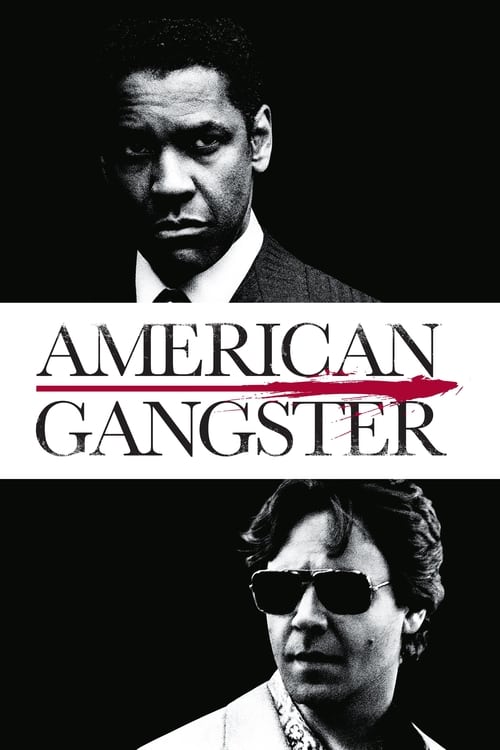
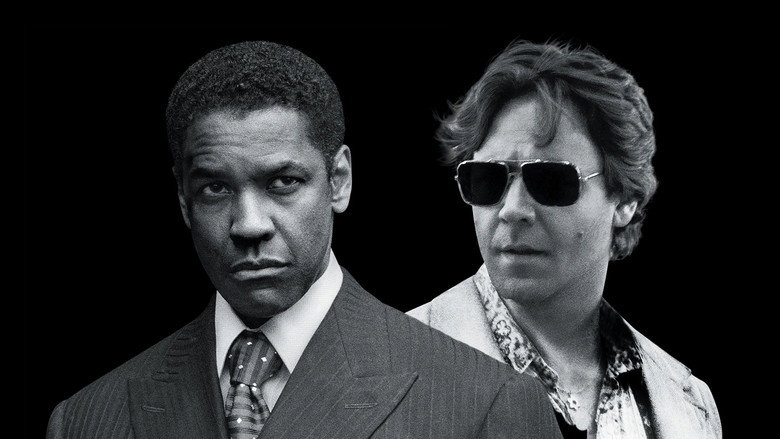
This article contains major spoilers for American Gangster. Read only if you have already seen it.
Ridley Scott's American Gangster stands as a masterclass in the cinematic portrayal of the kingpin lifestyle, balancing the calculated brilliance of Frank Lucas against the relentless pursuit of Richie Roberts. It captures a specific, grimy era of New York City where the lines between law enforcement and the criminal underworld were blurred beyond recognition.
For those drawn to the complex moralities, high-stakes power plays, and meticulous character studies found in the film, these five crime biopics offer a similarly immersive descent into the lives of men who shaped history through shadow and syndicate.
The Path of the Kingpin
The appeal of American Gangster lies in its procedural attention to detail. It is not just about the gunplay, but the logistics of the heroin trade and the slow, inevitable erosion of a man's humanity. When you seek out similar films, you are looking for that specific intersection where ambition meets inevitable downfall.
What worked: The film benefits from the natural chemistry between Denzel Washington and Russell Crowe, which turns a standard cat and mouse game into a sophisticated chess match. What did not work: Some historical purists might find the dramatization of Frank Lucas's life to be overly glossy, omitting the reality of his criminal impact. The verdict: Despite its narrative liberties, it remains a pillar of the genre that demands sequels of equal grit and ambition.
The most dangerous person in the room is the one who treats crime like a corporate venture, stripping away the bravado to focus on supply chains and market dominance.
1. Blow
If you appreciated the focus on the business of illegal substances, Blow is the natural next step. It chronicles the rise of George Jung, the man who brought cocaine to the American suburbs in the 1970s. While Frank Lucas favored the quiet efficiency of the streets, Jung favored the fast-paced, disco-fueled excess of the international trade.
The film excels in demonstrating how one man can shift the culture of an entire nation through sheer logistical ingenuity. Johnny Depp delivers a performance that oscillates between charismatic entrepreneur and tragic figure, making the collapse of his empire feel deeply personal rather than just a legal defeat.
American Gangster scene 1
2. Donnie Brasco
For those who loved the internal rot of criminal organizations, Donnie Brasco offers a claustrophobic look at the mob. The film centers on an undercover FBI agent who infiltrates the Bonanno crime family, finding an unlikely mentor in a low-level hitman played by Al Pacino. It is a story about the blurring of identity and the heavy cost of living a double life.
Loyalty is a currency in the mob, but it is a currency that eventually devalues to nothing once the authorities begin tightening the noose.
The tension here is not just about getting caught, but about becoming the very person you are trying to destroy. It explores the psychological toll of deep-cover work, a theme that mirrors Richie Roberts' struggles in American Gangster.
3. Goodfellas
Martin Scorsese defined the modern crime biopic with the story of Henry Hill. While American Gangster plays with a sense of regal stoicism, Goodfellas is a frantic, high-octane descent into the chaotic reality of life in the Mafia. It is essential viewing for anyone interested in the social hierarchy of crime.
American Gangster scene 2
The film captures the seduction of the life, the camaraderie, and the abrupt violence that ends it all. It is arguably the most influential crime film ever made, providing the blueprint for how to balance narration, period detail, and moral decay.
4. The Irishman
If the scope of American Gangster appealed to you, The Irishman provides a meditation on mortality and the long-term consequences of a life spent in the shadows. Covering decades of Frank Sheeran's life, it functions as a eulogy for the golden age of organized crime in America.
The film forces the audience to sit with the silence of the aftermath. It is less about the excitement of the heist and more about the heavy silence that follows a lifetime of violent service, making it a perfect companion piece for those who enjoyed the reflective final act of Frank Lucas's story.
5. Carlito's Way
Brian De Palma directs this tale of a mobster trying to leave the life behind, only to find that his past has a gravitational pull. Al Pacino gives a nuanced performance as a man fighting for redemption in a world that refuses to forgive. It captures the fatalism often present in the best crime dramas.
American Gangster scene 3
The defenders: Many consider this the most soulful performance of Pacino's later career. The critics: Some argue the pacing suffers in the middle, yet few can deny the power of the final sequence in Grand Central Terminal. The middle: It is a stylized, operatic tragedy that serves as a perfect bookend to the grittier, street-level realism of other biopics.
Final Reflections on the Genre
These films represent the pinnacle of the genre because they treat the criminal not as a caricature, but as a person trapped in a system of their own making. Whether it is the cold logic of the drug trade or the tribal loyalty of the mob, these stories remind us that crime is rarely just about the money.
True power is often found in the ability to walk away, yet these characters are almost universally defined by their inability to do so. They offer a window into the darkest corners of human ambition, reminding us that every empire built on sand is eventually claimed by the tide.