
Blade Runner 2049 Ending Explained: K, the Child, and the Snow
⚠️ Spoiler Warning
This article contains major spoilers for Blade Runner 2049. Read only if you have already seen it.
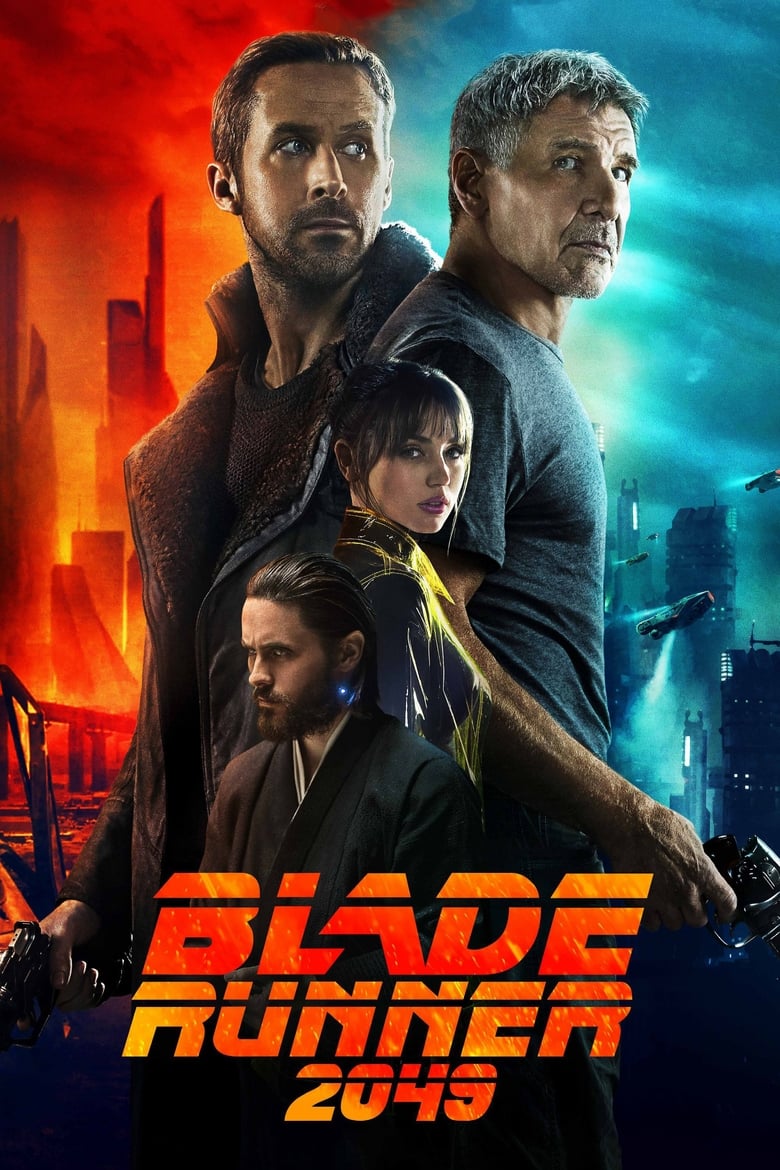
Denis Villeneuve's Blade Runner 2049 is built on a fake-out. For most of its runtime, the replicant K believes he might be the impossible child of Deckard and Rachael, born rather than manufactured. In the final act, the film tells him, and us, that he is not. The child is someone else. And then K does the most human thing in the film anyway.
Here is what the ending reveals, what Villeneuve confirmed, and why the twist is the point.
Quick Answer
K (Ryan Gosling) is a Nexus-9 replicant and a blade runner. He investigates a replicant child and comes to believe, through a planted childhood memory, that he is that child. He is not. The child is Dr. Ana Stelline (Carla Juri), a memory designer who was hidden away as an infant and now lives in a sealed facility. The memory K carried was hers, given to him. At the end, K protects Deckard (Harrison Ford) from the replicant corporation, brings Deckard to his daughter Ana's facility, and lies dying on the steps outside as snow falls. He was never the miracle. He is the one who carried it home.
The Ending, Scene by Scene
K learns from the memory designer Ana that the memory of the wooden horse, the memory that made him believe he was the child, is real, but it is hers. She gave it to him. K is a standard replicant with implanted memories like any other. He goes to Deckard, who is being hunted by Wallace's replicant Luv. K rescues Deckard from the corporation, fakes Deckard's death to protect him, and takes Deckard to Ana's facility. Deckard enters to meet the daughter he has never seen. K steps outside. He sits on the steps. Snow falls. He closes his eyes. The film cuts to black.
"Villeneuve has said K is not the chosen one. He is an ordinary being who chooses to do something meaningful. The whole film is built to make that ordinary choice feel as large as a miracle."
What the Director Has Confirmed
Confirmed: Villeneuve has said the film is about an ordinary being, K, who decides to do something meaningful. The structural twist, that K is not the special child, is the point. The story refuses the chosen-one fantasy and asks instead whether a being with no destiny can still choose a moral act.
Confirmed: He has also said the film is deliberately ambiguous about whether Joi (Ana de Armas), K's holographic companion, genuinely loved him or whether her love was programmed. The scene with the giant pink Joi billboard, calling him "a good Joe," is meant to plant the unsettling possibility that the most intimate relationship in K's life was a product.
Did K Die?
Strongly implied: K dies on the steps. He has been fatally wounded in the fight with Luv, and the snowfall, the closing eyes, and the stillness frame the moment as a quiet death. Villeneuve has not stated it outright, but the imagery leaves little room. The death is meaningful because K chose it. He was not required to save Deckard. He could have walked away. He did not.

Frequently Asked Questions
Is K the child of Deckard and Rachael?
No. K is a standard replicant who was given the implanted memories of the real child. The real child is Dr. Ana Stelline, the memory designer, who was hidden away for her own protection. his arc is about discovering he is not special, and choosing to act anyway.
Did K die at the end of Blade Runner 2049?
The film strongly implies K dies. He lies on the steps outside the Ana Stelline facility as snow falls, having completed the one real thing he will ever do, reunite a father and daughter. Villeneuve leaves a sliver of room, but the image is framed as a quiet death.
Does Joi truly love K?
Ambiguous by design. Joi is a holographic companion whose affection could be genuine emergent feeling or mass-market programming. The giant pink Joi billboard that calls K a good Joe suggests her tenderness may be a product sold to everyone.
What is the meaning of the Blade Runner 2049 ending?
Villeneuve has said the film is about an ordinary being who chooses to do something meaningful. K is not the miracle. He is the one who carries the miracle to where it needs to go. His death is meaningful precisely because he was never destined for it.
Final Verdict
Blade Runner 2049's ending is a rebuke to the story it seems to be telling. The film sets up a chosen-one mystery and then refuses it. K is not the child. He is a manufactured being with someone else's memories who, at the moment he learns the truth, does the most human thing in the film: he gives a father his daughter, knowing he will not survive it and knowing no one will remember him for it. The snow on the steps is the closest the film comes to grace.
The most human act in the film is performed by someone who was never born.
Related Ending Explained Guides
Written by StreamRoulette Editorial
You May Also Like



Not Sure What to Watch Next?
StreamRoulette picks your next film in seconds — based on mood, genre, or platform.
Try StreamRoulette